The Right Way to Clean and Disinfect a Bathroom
Nobody wants to hand over a Saturday to the bathroom. Yet a bathroom that never gets properly cleaned makes itself known: it smells, the glass looks foggy, and germs can live on the handles. The good news is that cleaning a bathroom is a skill you can learn, not a gift you are born with. This guide covers the right way to clean and disinfect a bathroom — which cleaner to reach for, the spots that matter most, and a schedule you can actually keep. Curious where you stand already? Take the House Cleaning Service Quiz before you start.
The Golden Rule Comes Before the Gloves
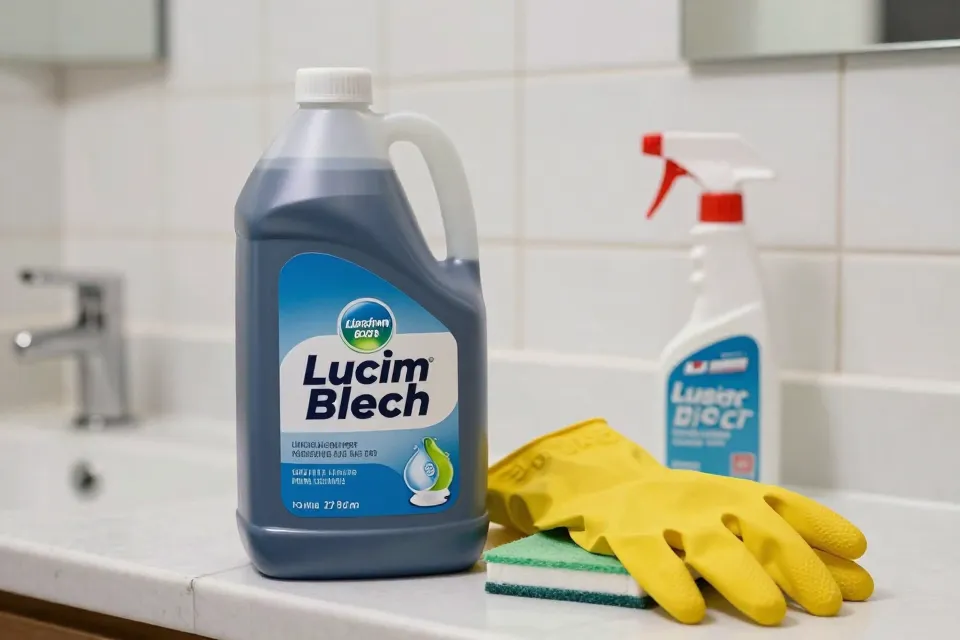
Bleach disinfects well, but it demands respect. Do not combine it with any other cleaner. Plenty of everyday products contain ammonia or mild acids, and mixing those with chlorine bleach can create chlorine gas, which stings the eyes, nose, and throat and can turn serious fast. The CDC and Loma Linda University health experts both put this warning first. One cleaner at a time is enough for any job in this room.
Safety habits worth building from day one:
- Open a window or run the exhaust fan when you use bleach indoors.
- Wear gloves, and eye protection if the label calls for it.
- Pick regular, unscented household bleach for disinfecting. Splashless or laundry-style bleach is not meant for that job.
- If the label lacks directions, mix 5 tablespoons of bleach into one gallon of room-temperature water (or 4 teaspoons into a quart). Keep the mix wet on the surface for at least a full minute.
- Make the mix fresh on the day you use it. Once diluted, bleach loses its strength within about 24 hours.
- Clean first, disinfect second. Soap, water, and scrubbing lift the germs away, then the disinfectant finishes the leftovers.
- On an ordinary week, skip the heavy disinfecting. The CDC says soap and water alone removes most germs from most surfaces; bring out the disinfectant when someone in the house is sick.
If a family member breathes in strong bleach fumes and feels ill, call Poison Control at 1-800-222-1222.
Pick the Cleaner That Fits the Mess
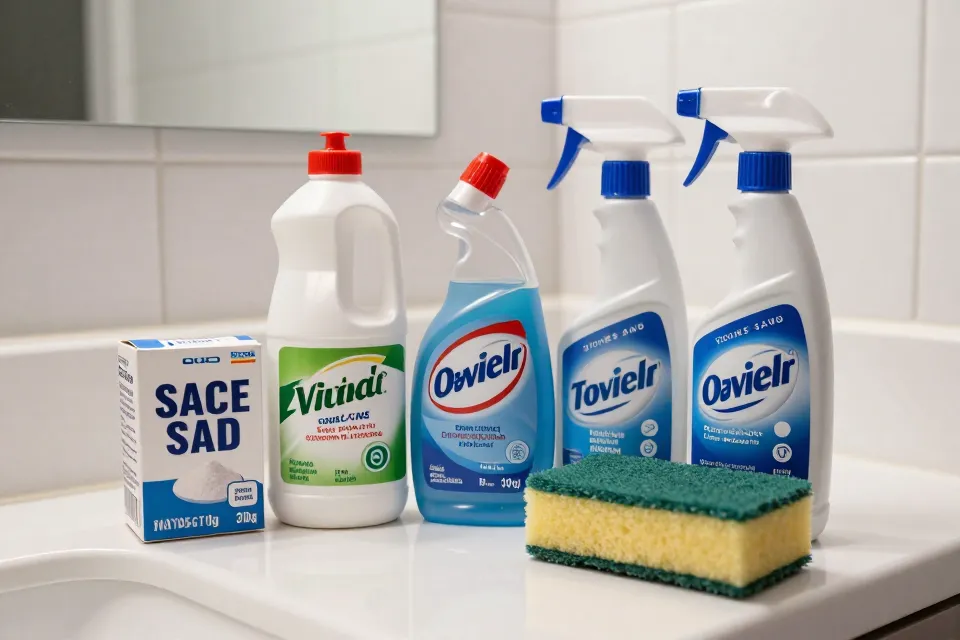
Most bathroom-cleaning failures start with the wrong bottle. Match the product to the problem and half the work is done:
| Mess you see | Reach for | Why it works |
|---|---|---|
| Soap scum on the tub, shower walls, or glass door | Baking soda paste, or white vinegar with a squirt of dish soap in warm water | Baking soda is a mild abrasive; the vinegar mix dissolves the film |
| Hard-water crust on faucets or the showerhead | White vinegar bag trick, described below | The acid breaks down mineral deposits |
| Toothpaste splatter in the sink | Baking soda paste | Lifts the mess without harsh chemicals |
| Ring or stain in the toilet bowl | Toilet cleaner, or baking soda | Cuts grime and freshens the air |
| Germs on handles, knobs, and the seat | Disinfecting spray or wipes, used after cleaning | Kills what the scrubbing already loosened |
| Granite countertop | Stone-safe cleaner | Vinegar and other acids can dull and etch natural stone |
| Lingering smells | Baking soda | It neutralizes odors instead of masking them |
The classic paste is about two parts baking soda to one part water. Blend it, rub it in with a soft sponge, rinse well, and dry. That small recipe handles toothpaste splatter, water spots, and light soap scum.
Four Trouble Spots, One Working Order
Every bathroom has four zones where grime piles up: the toilet, the sink area, the shower and tub, and the finishing touches such as curtains, mirror, and floor. Work them in this order and you will not re-dirty what you just cleaned.
The Toilet: Outside First, Bowl Last
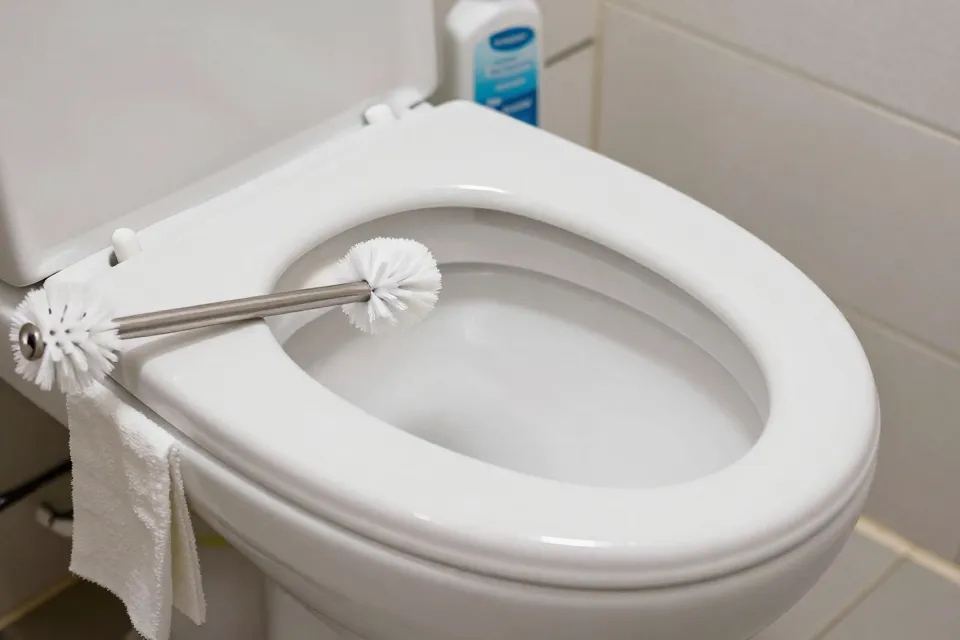
Clean the outside of the toilet before the inside. The exterior catches dust, spray, and fingerprints, so start at the cleanest point and end at the messiest: the flush handle and the top of the tank, then the seat and lid on both sides, then the base. Keep one dedicated rag for the toilet only. A rag that has touched the toilet should never wipe the sink, or you simply move the germs around. For the bowl, sprinkle toilet cleaner or baking soda under the rim, leave it for 10 to 15 minutes (stretch that toward half an hour for a stained bowl), scrub with the toilet brush, and flush. Hard-water ring that will not move? Wet a pumice stone and rub gently. From time to time — especially if a smell lingers — take the seat off and clean beneath the hinges.
The Sink and Faucets: Paste Beats Spray
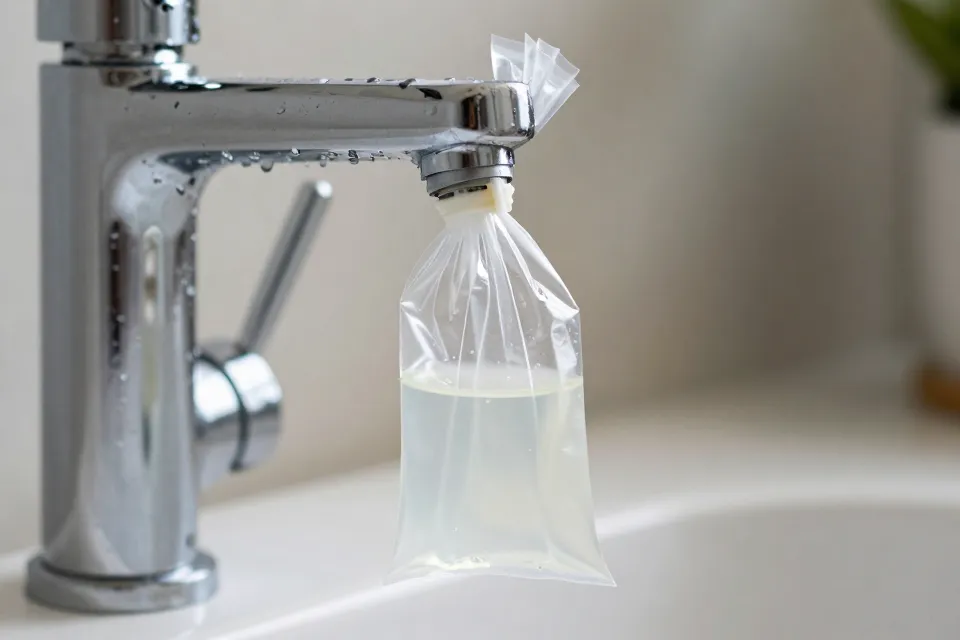
Wipe the countertop before the sink. Pushing crumbs and dust into the bowl is exactly where they should end up, so counters go first. Then make the paste and scrub the basin with a soft sponge. An old toothbrush is the right tool for the seam where the faucet meets the counter and for crust around the handles. Rinse well and dry. For a faucet crusted with hard water, pour white vinegar into a plastic bag until it is roughly a third full, hold the bag around the fixture with a rubber band, and leave it for a few hours or overnight. Scrub off the softened crust and the metal shines again. The same trick clears a slow showerhead.
The Shower and Tub: Outlast the Soap Scum
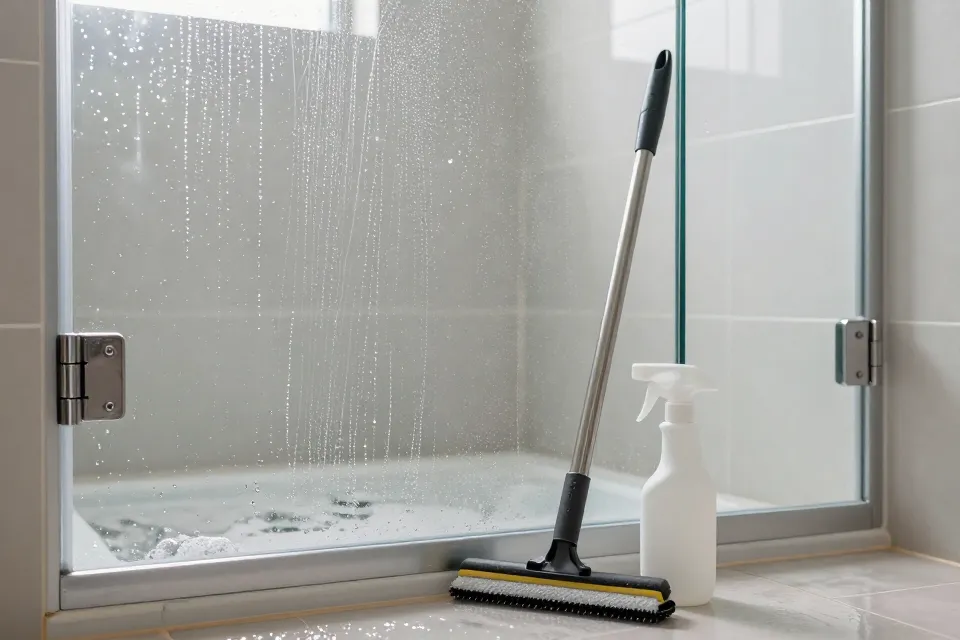
Soap scum is soap mixed with body oils and minerals, and it grips glass and tile like glue. Spray the shower walls with your regular cleaner and give it a few minutes before wiping — the product needs time to work. When scum has already built up on a glass door, use the vinegar mix from the table: vinegar, warm water, and a squirt of dish soap. Spread it on, wait about 30 minutes, wipe it away, and finish with glass cleaner so no streaks remain. Start at the edges of the tub and work toward the drain. A squeegee after every shower keeps the film from ever gaining ground. Two cautions: keep steel wool and harsh scouring pads away from porcelain, because they scratch the finish, and if your water is hard, use a product made for calcium and lime.
Curtains, Mats, Mirror, and Floor
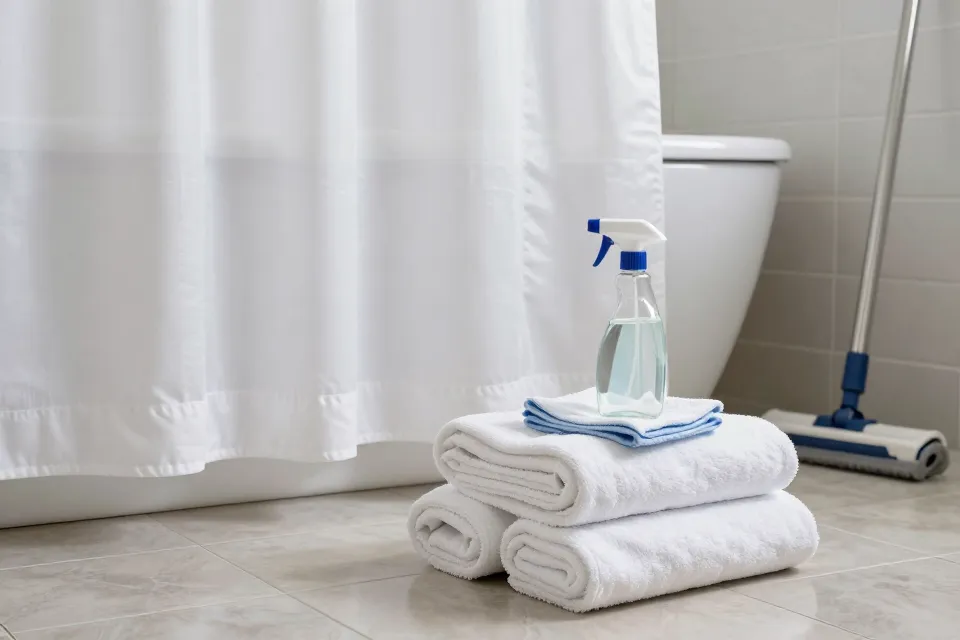
Damp fabric is where bathroom mold starts, so wash the shower curtain and its liner at least once a month. Plastic and fabric liners are both machine-washable in most cases, but check the care tag first. Bath mats join them in the laundry. For the mirror, mist on glass cleaner and buff with a lint-free cloth — an old cotton T-shirt works fine, and flipping the cloth over gives you the dry shine. Finish on the floor. Sweep first, then mop with warm soapy water, then rinse with plain water so nobody slips on leftover soap. Give the baseboards a quick wipe, and do not skip the floor along the base of the toilet. That corner collects more than its share.
Airflow Decides the Mold Fight
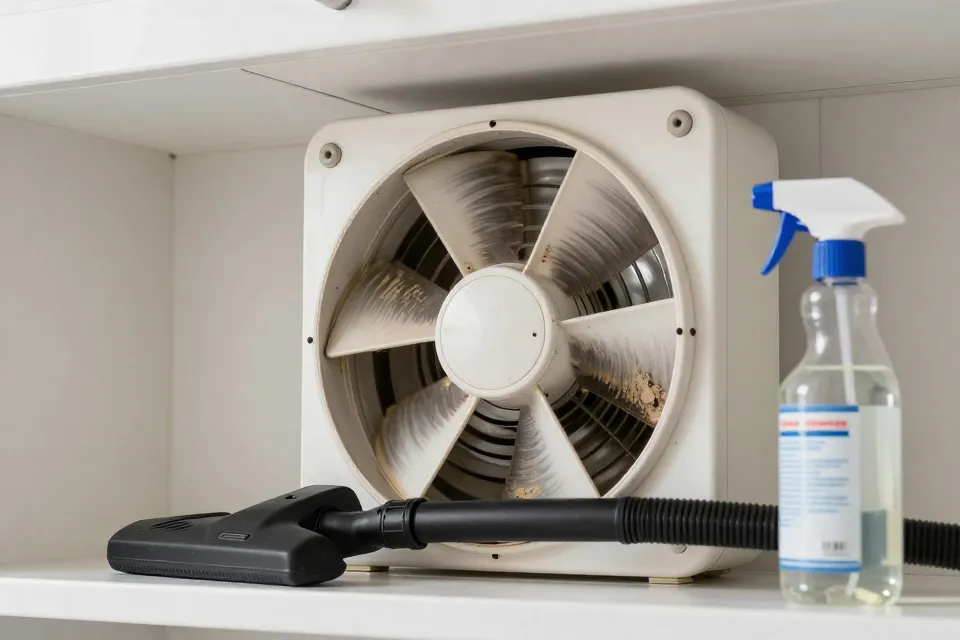
Mold and mildew are moisture problems wearing a cleaning disguise. The exhaust fan is the cheapest weapon you own: run it while you shower and keep it on for a while after. Clean the fan every six months or so — pop off the cover, vacuum the inside, and soak the blades in a half-and-half vinegar-and-water mix. Now for the surprise: bleach is usually the wrong tool for routine mold. Health experts warn that bleaching mold can send spores into the air, which irritates your airways. The better order of work is to find and fix the leak or damp spot, dry the area, and wash it with soap and detergent. If mold has grown into something porous, like carpet or fabric, those materials may be beyond saving — porous items cannot be fully disinfected and sometimes have to go.
Respect the Tools That Do the Dirty Work
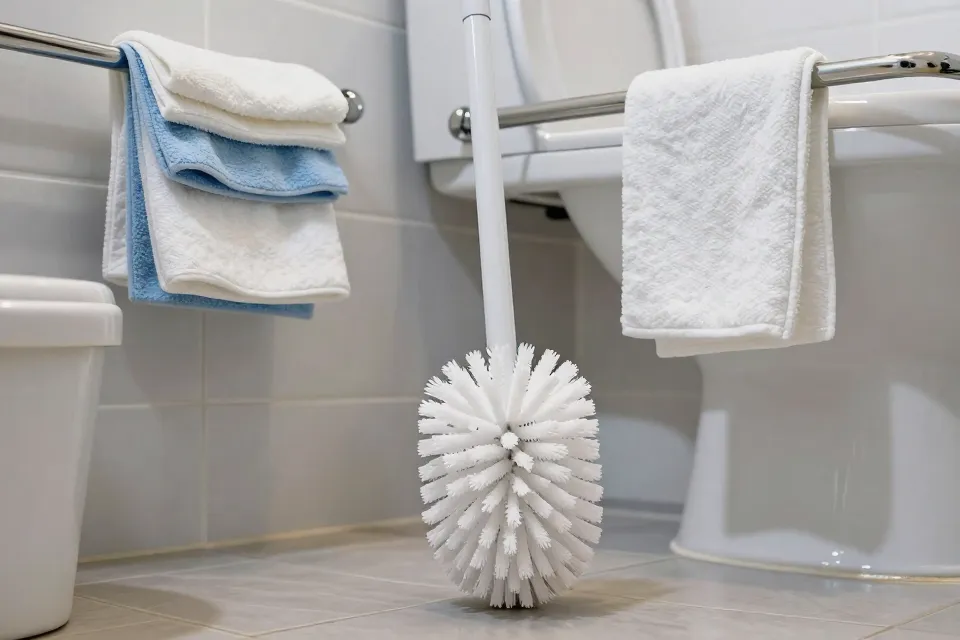
Your brush and rags touch everything, so they deserve care too. Designate one rag as the toilet rag and let it stay that way. Rinse your toilet brush after each use and leave it to drip dry instead of storing it wet. Wash your hands when the job is finished. And never flush paper towels or cleaning wipes — they belong in the trash, not in the pipes.
A Schedule That Fits a Real Life
The right frequency keeps a bathroom healthy without turning cleaning into a second job:
| When | What to do |
|---|---|
| Every day | Run the fan during and after showers; rinse the sink bowl after brushing; pull the squeegee across the glass |
| Every week | Do the full regular clean — about an hour — and wipe handles and the toilet seat with a disinfectant |
| Every month | Wash the shower curtain and liner; scrub the tile; give the tub a baking soda treatment |
| Every few months | Deep-clean the grout three or four times a year; soak the showerhead in vinegar; check under the toilet seat hinges |
| Every six months | Clean the exhaust fan; reseal the grout |
Every home is different. A bathroom with weak ventilation or very hard water simply needs more attention. Use the table as your starting point and adjust to what your own bathroom shows you.
Myths That Cost Time — or Worse
| Myth | What is actually true |
|---|---|
| Mixing two cleaners makes a stronger cleaner | Combining bleach with ammonia-based or acidic products can release dangerous gas. Use one cleaner at a time. |
| Bleach is the best mold treatment | For everyday mold, fix the damp spot and wash with soap and detergent. Bleach can stir mold spores into the air. |
| Every surface needs disinfecting every time | On most days, soap, water, and scrubbing remove germs well enough. Disinfect after cleaning, and more often when someone is sick. |
| One rag can handle the whole room | A rag that has touched the toilet must stay with the toilet, or germs travel to the sink. |
| Harsher pads mean cleaner surfaces | Steel wool and heavy scouring pads scratch porcelain. A mild abrasive cleans without lasting damage. |
| Vinegar is fine on granite | Acid can dull and etch natural stone. Stone counters need stone-safe products. |
| A white bowl does not need scrubbing | Minerals in the water stain even a clean-looking bowl. A quick weekly scrub keeps deep cleans rare. |
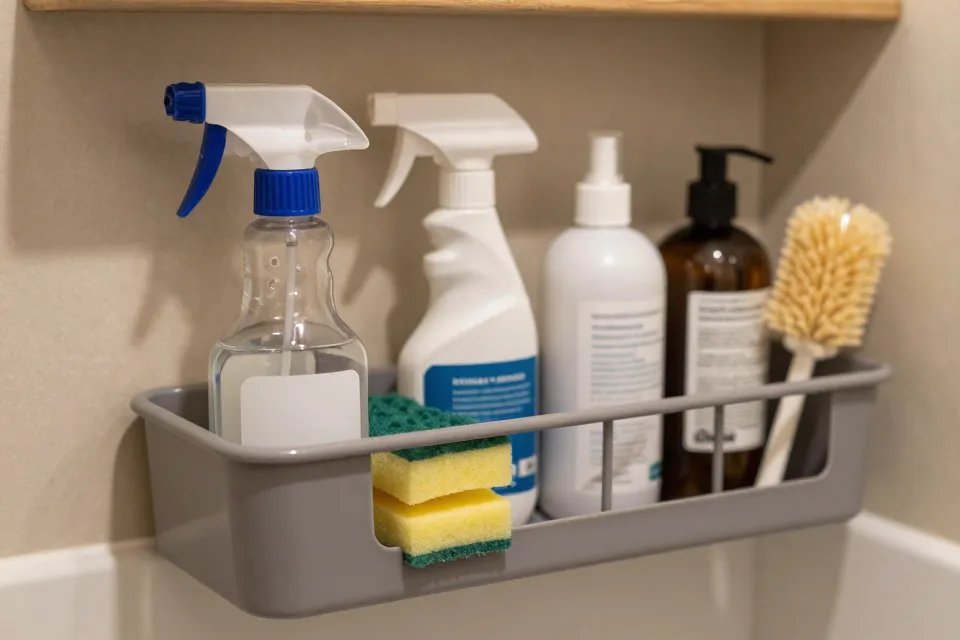
There it is: the right cleaner for every mess, the four trouble spots in a workable order, a schedule you can keep, and the safety rules that protect your family. Start with one zone this weekend — the toilet is a fine first win — and watch the rest of the room follow. Feel ready to prove your know-how? Take the House Cleaning Service Quiz and see how you score.
Content on KnowHow Bench is for general information only. See our Disclaimer for details.