
Meal Planning on a Budget: 7 Steps to Save Money and Waste Less Food
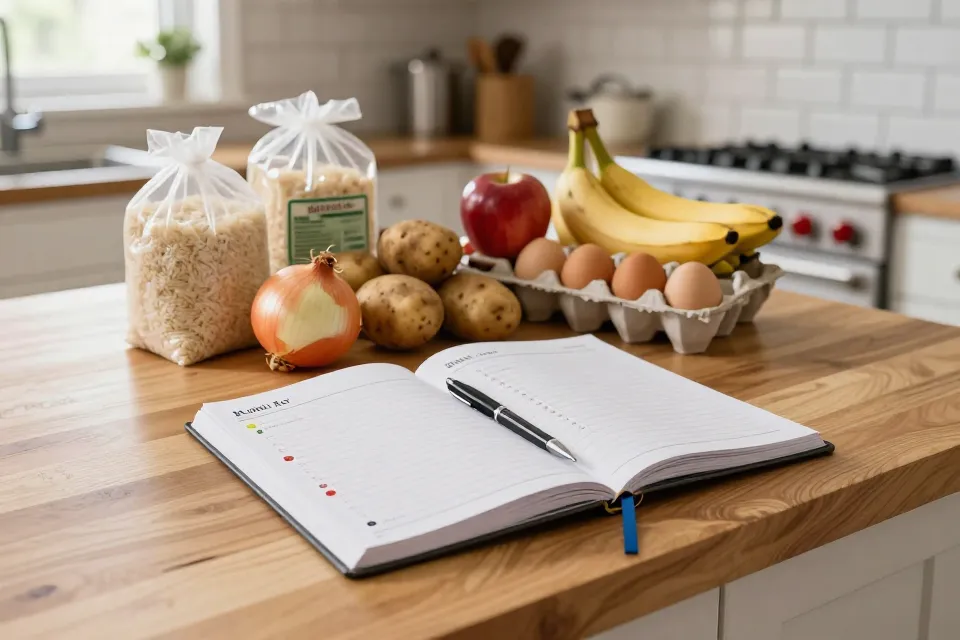
Groceries keep getting more expensive, and the food that quietly goes bad in the back of the fridge is money you already spent. The fix is not a magic app or a couponing marathon. It is a short weekly routine: plan the meals, shop with a list, store food correctly, and use up what you bought. This guide walks through that routine step by step, from the first planning session to the last leftover, and ends with a checklist you can reuse every week.
Why Meal Planning Pays Off
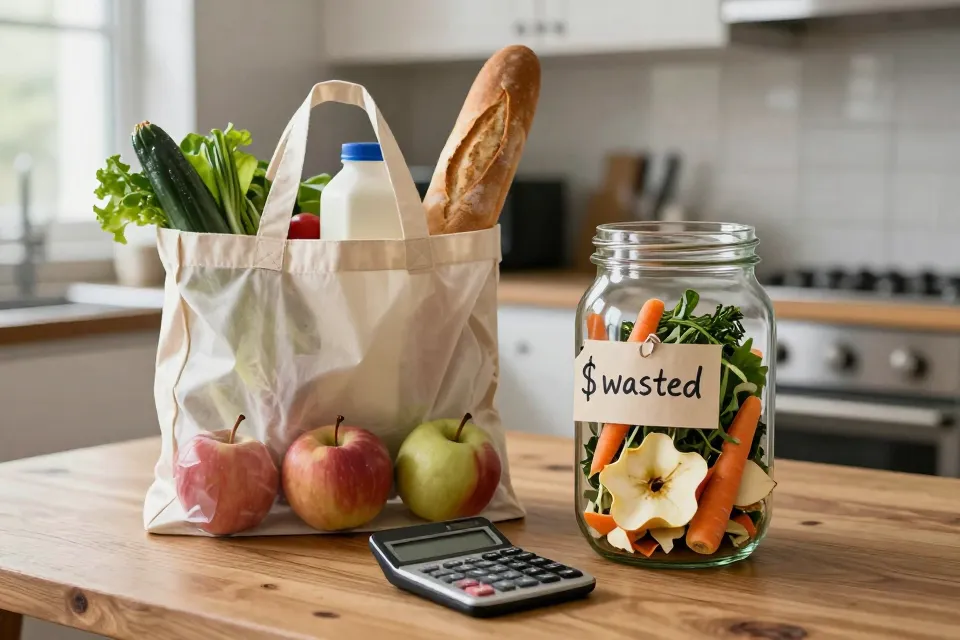
Planning tackles the two leak holes in most food budgets at once: money spent on unneeded items and money wasted on uneaten ones. The numbers behind the second leak are striking. USDA estimates put food loss at retail and consumer levels at about 31 percent of the food supply — roughly 133 billion pounds worth about $161 billion in 2010 — and overall U.S. food waste at 30 to 40 percent. Households that trim their waste could pocket about $370 per person each year, close to $1,500 for a family of four. There is an environmental angle too: wasted food is the largest single category of material in municipal landfills, which are a leading source of human-caused methane emissions.
Step 1: Take Stock Before You Shop
Meal planning starts in your own kitchen, not at the checkout lane. Think of the pantry, refrigerator, and freezer as a mini grocery store whose shelves you have already paid for. Note what is on hand, what is half-used, and what needs eating soon — those items should shape the week's menu before you buy anything new. In extension-service terms, this is "shopping" your own inventory first, and it stretches the grocery budget by using purchases already made.
Step 2: Sketch Out Seven Days of Meals
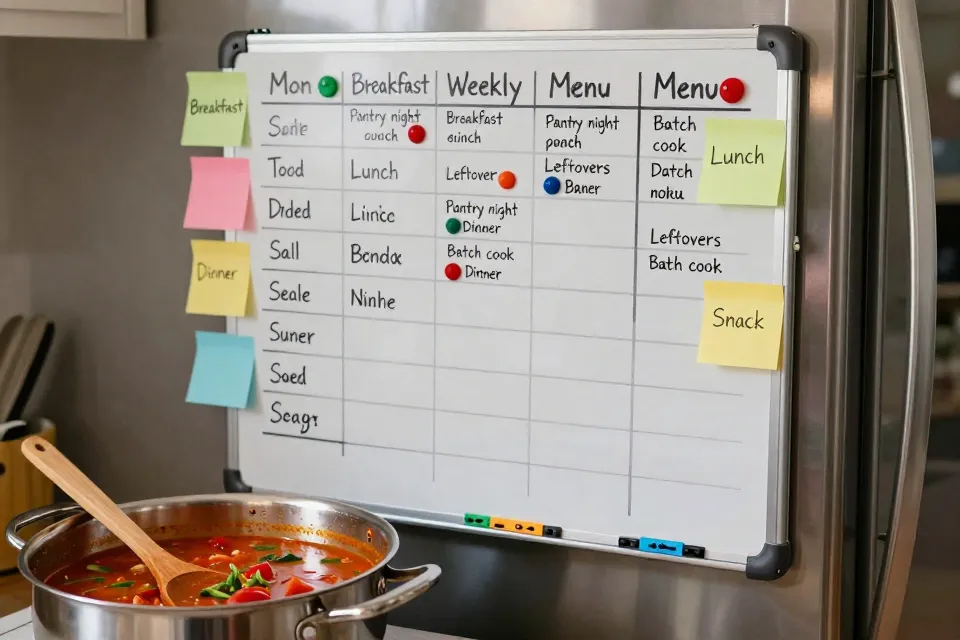
Once a week, set aside a quarter hour to map the menu: breakfasts, lunches, dinners, and snacks for everyone, plus any birthdays or holiday meals coming up. USDA's budget guide recommends covering the five food groups and reading Nutrition Facts labels, favoring foods low in added sugars, saturated fat, and sodium. Let pricey ingredients work harder: soups, salads, stews, and stir-fries turn a small amount of meat into several servings. Many planners find that keeping a short rotation of favorite dinners makes the whole process faster — you spend your planning time on the list, not on deciding what to cook.
Step 3: Write the List — and Bring It
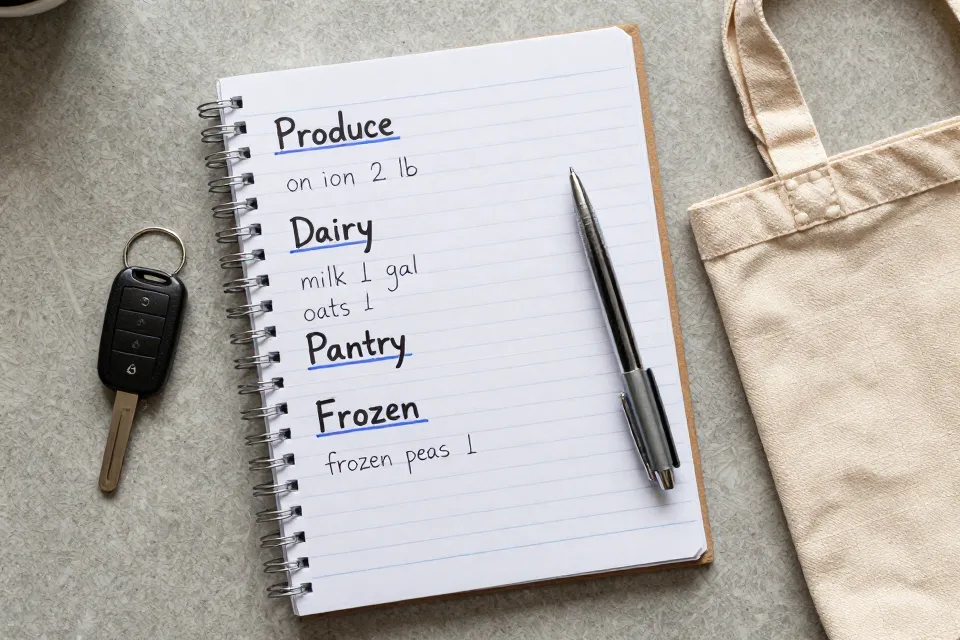
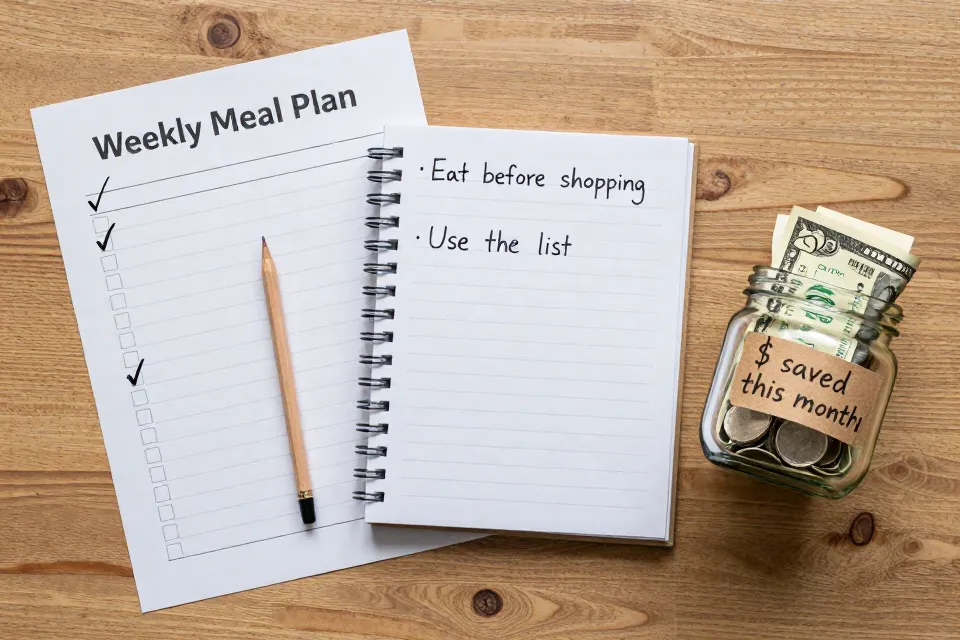
Turn the menu into a grocery list that says both what to buy and how much. Leave off anything already stockpiled at home, and organize the list by store section or food group so the trip moves in one pass. USDA's budget advice adds two timing rules: shop when you are not hungry, and shop when you are not rushed — both states invite impulse buys and convenience foods that inflate the total. A list that rides into the store in your hand is the single most reliable budgeting tool in this guide.
Step 4: Compare Prices Before You Pay
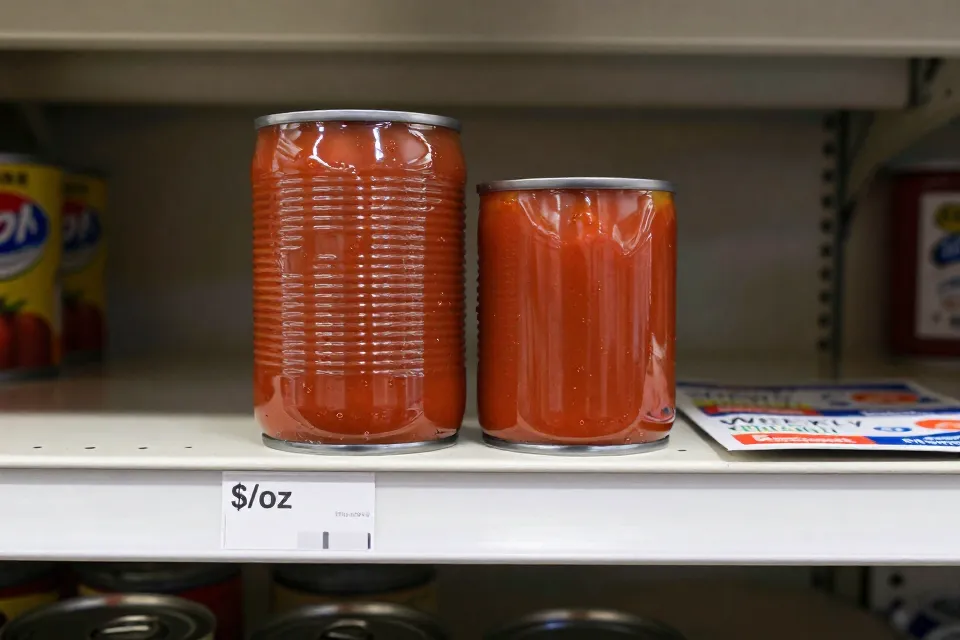
At the store, the tiny shelf tag under each product lists a unit price — dollars per ounce, per pound, or per item — so you can tell whether the bigger package really is the better buy. USDA's budget guidance suggests checking store circulars or online deals, using loyalty cards, and stacking manufacturer coupons with store sales for double savings. The catch: comparisons only matter for items on the list. Many planners find that a price-matched list cuts both the bill and the time spent staring at shelves.
Step 5: Prep Ahead, Cook Twice
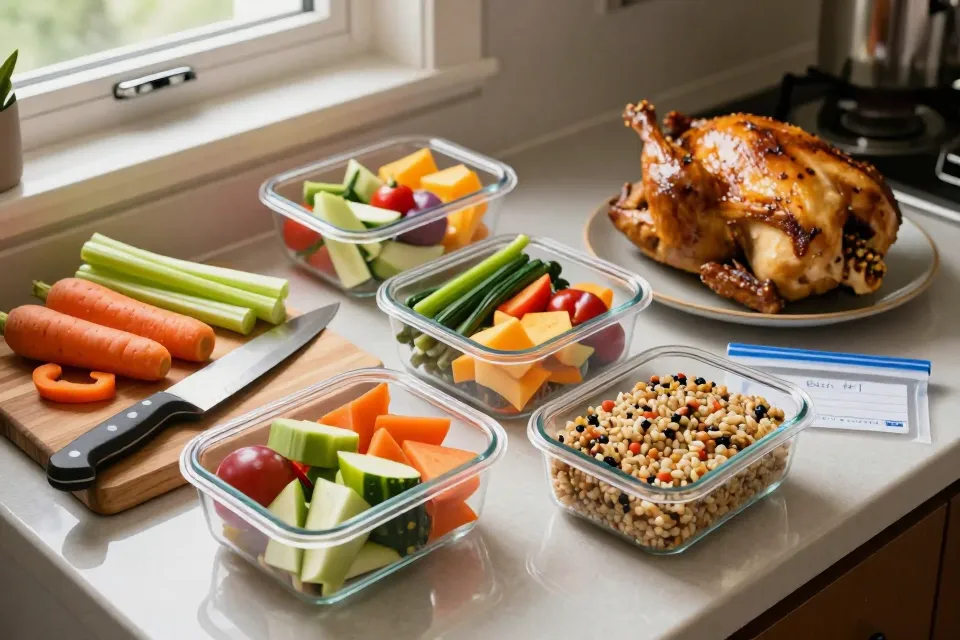
A little weekend work pays dividends on busy weeknights. USDA suggests slicing fresh fruits and vegetables ahead for grab-and-go snacks, and doubling recipes so the freezer holds meals for later in the week — leftover roasted chicken, for instance, can become chicken salad or quesadillas. Extension nutritionists add that prepping during quieter times, such as weekends, works best, and that beginners should keep things small at first — one planned meal or two instead of a full seven-day schedule.
Step 6: Store Food So It Lasts — and Stays Safe
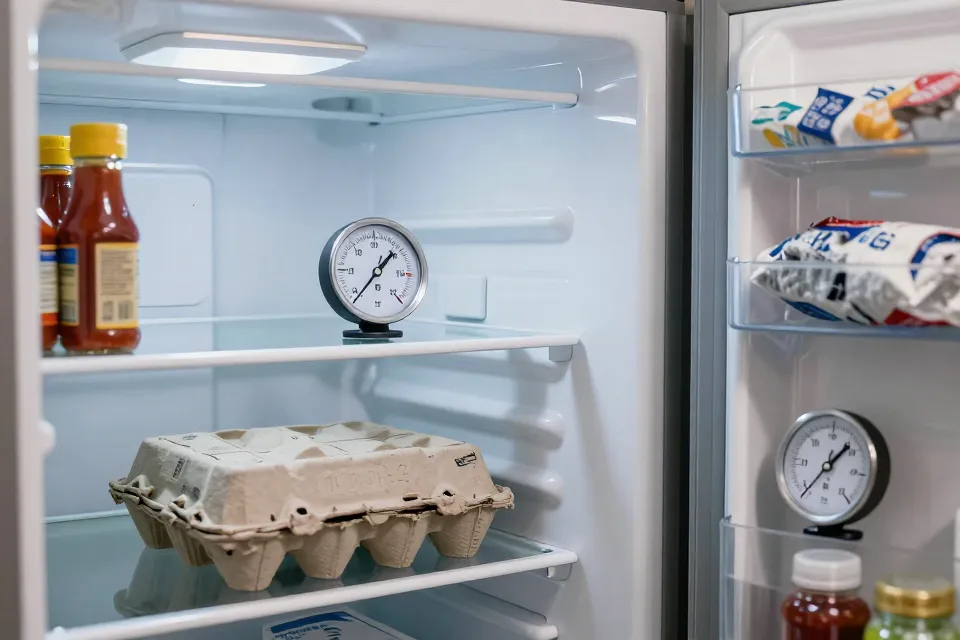
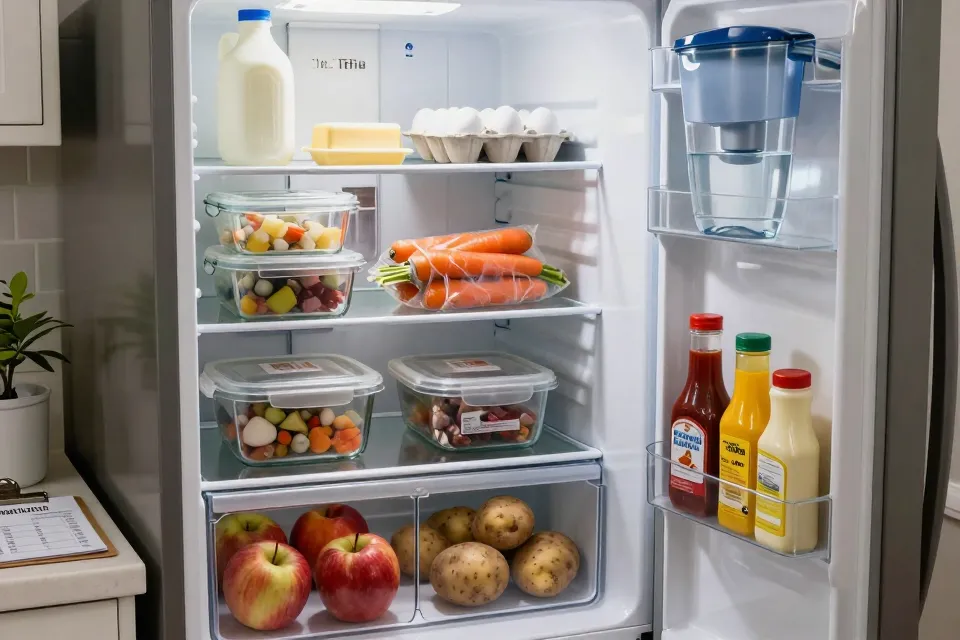
Safe storage keeps costly food edible longer, and the FDA's rules of thumb are easy to follow. Hold the refrigerator at or below 40°F and the freezer at 0°F, verifying with an inexpensive appliance thermometer at least weekly. Perishables — meat, poultry, seafood, eggs, leftovers, even takeout — should not sit out longer than two hours, or one hour if the room is above 90°F. Keep eggs in their original carton on an interior shelf, not in the door where the temperature swings. Frozen food stays safe indefinitely at 0°F; it is quality that declines, so rotate older packages to the front. Freezer burn looks like dry gray-brown patches but signals a quality problem, not a safety one. A "use by" date is a manufacturer's quality hint, not a food-safety deadline — with one exception: infant formula and some baby foods must be used by that date.
Step 7: Turn Leftovers Into a Feature
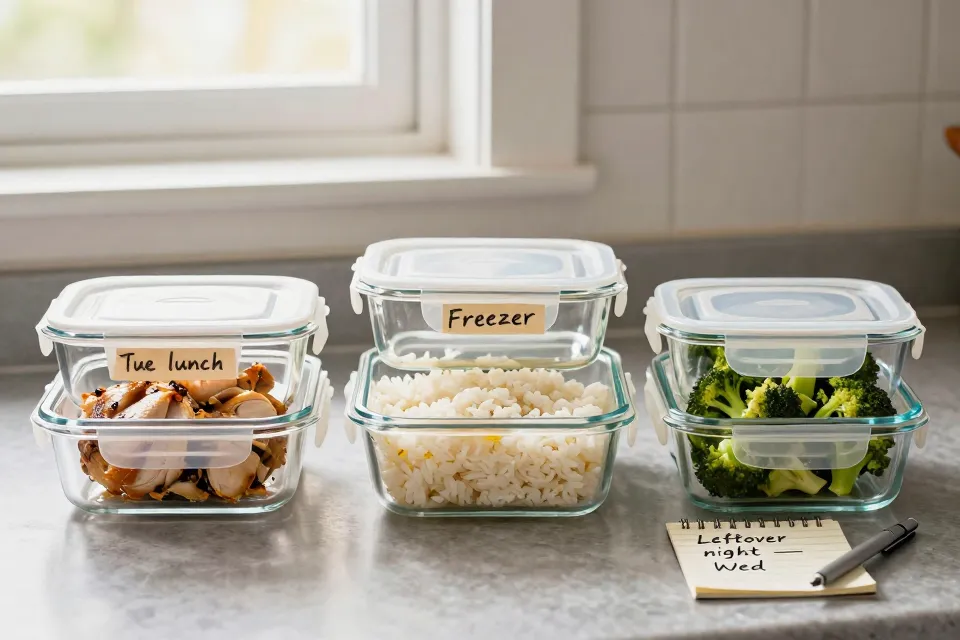
Think of leftovers as meals that already happened — and already got paid for. Extension guidance suggests planning servings for everyone at the table, plus extras on purpose: tomorrow's lunch or a portion to freeze for a busier week. The payoff is real. USDA research finds households could save about $370 per person yearly by trimming waste, which for a family of four means roughly $1,500 staying home instead of going to the landfill. Keep those planned extras safe: store them in covered containers, keep them cold, and check them daily, tossing anything that looks or smells suspicious.
Your Weekly Budget-Meal-Planning Checklist
Print this or keep it on your phone, and work through it the same day each week:
- Took stock of the pantry, fridge, and freezer
- Picked the week's meals — breakfast, lunch, dinner, and snacks
- Wrote the grocery list with amounts, minus what's already home
- Checked unit prices and store specials
- Shopped with the list, on a full stomach
- Chopped snacks and doubled at least one recipe
- Put perishables away within two hours; set the fridge to 40°F or below
- Scheduled a leftover night or froze extra portions
Common Money-Wasting Moves (and the Fix)
| If you… | Why it costs you | The fix |
|---|---|---|
| Shop on an empty stomach | Hunger invites impulse buys and convenience items | Eat before you go, then take the list with you |
| Grab the big package automatically | Bigger is not always cheaper per unit | Read the unit price on the shelf tag |
| Toss food when the "use by" date hits | That date is about quality, not safety | Check looks and smell; when unsure, discard — except baby formula |
| Let the fridge run warm | Bacteria multiply faster above 40°F | Use a thermometer; keep it at 40°F or below |
| Treat leftovers as an afterthought | Money turns to mold before it gets eaten | Schedule a leftover night or freeze portions now |
Make the Habit Stick
There is no one correct system. Michigan State University Extension points out there is no right order for the steps either — planners should find the rhythm that fits their household. Many planners find it easier to begin with a single goal, such as one planned dinner per week or one list-based grocery trip, and build from there. Some swear by a paper pad on the fridge; others prefer a notes app. Consistency beats perfection: a simple routine repeated each week beats an elaborate plan used once.
A budget-friendly week of meals is built before the store ever comes into view: plan it, list it, compare it, prep it, store it cold, and use it up. Each step is small, and together they do what no single money trick can — keep the pantry full, the trash can light, and the budget on track.
Want to turn budgeting into a habit? Browse the quiz library for quick practice.
Content on KnowHow Bench is for general information only. See our Disclaimer for details.