
Tire Care Basics: Pressure, Tread, Age, and Rotation, Explained
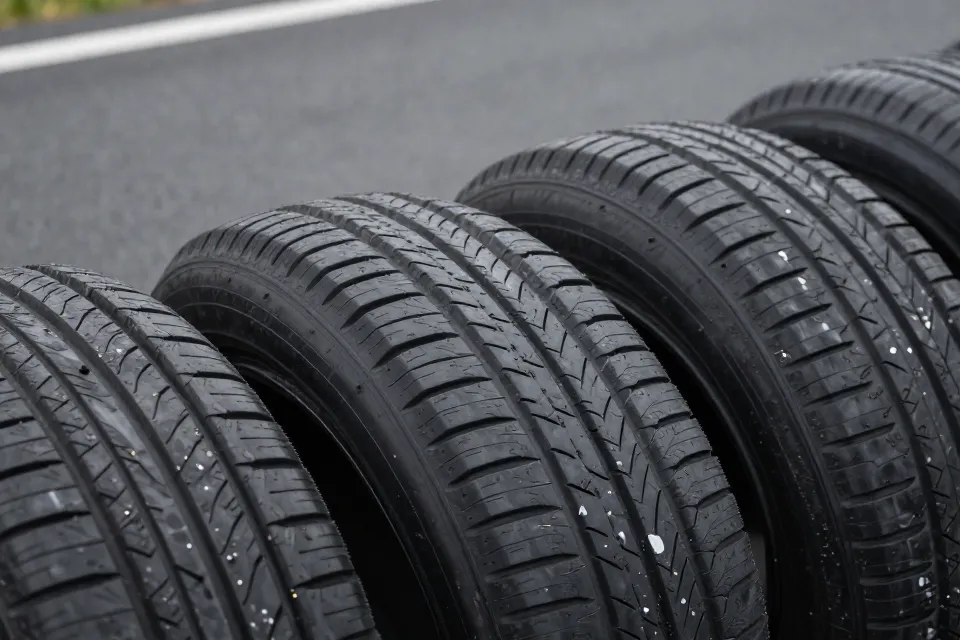
Your tires are the only part of the car that actually touches the road. Four patches of rubber, each roughly the size of your hand, carry the entire weight of the vehicle, absorb every bump, and decide how quickly you stop on a wet night. Yet most drivers only think about their tires when something goes wrong: a dull thump on the highway, a warning light on the dash, or a skittish ride through a downpour. The reassuring part is that tire care basics are simple, inexpensive, and take about fifteen minutes a month. This guide covers the four things that matter most — air pressure, tread depth, tire age, and rotation — with the exact numbers you need and the sources to check.
Why Tire Care Deserves a Place on Your Calendar
Keeping your tires in good shape is not a hobby for car enthusiasts; it is a safety issue and a money issue at the same time. A properly inflated tire lasts longer, responds more quickly to the steering wheel, helps fuel economy, and rides more smoothly than a tire running low on air, while both underinflation and overinflation can cause premature tread wear and even tire failure (Bridgestone). On wet roads, the stakes climb quickly: AAA research found that driving on relatively worn tires at highway speeds in rain can add close to 90 feet to your stopping distance compared with new tires — more than the length of a semi truck — and close to 800,000 crashes happen on wet roads every year. Age is the third factor. NHTSA research shows tires age faster in heat, so a car parked outside in a warm climate wears out its tires more quickly than an identical car kept in a garage (AAA).
Air Pressure: Check It Monthly, When the Tires Are Cold
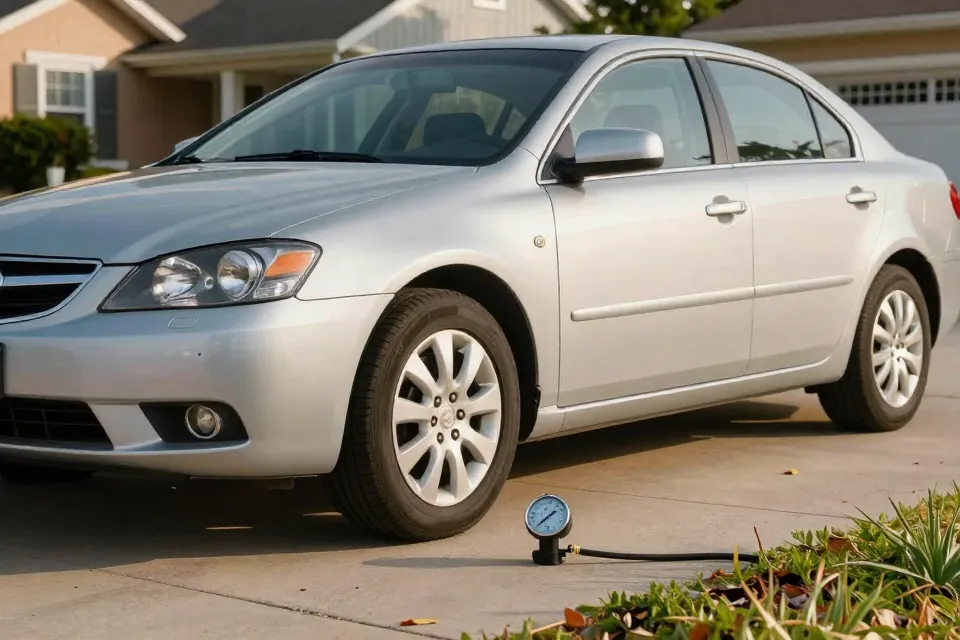
The single most valuable tire habit is checking pressure once a month. The target that vehicle manufacturers specify is a cold number: the pounds per square inch (psi) assumes the tires have not been warmed by driving. A tire counts as cold once the car has sat parked for three or more hours, or after less than one mile at moderate speed (Bridgestone).
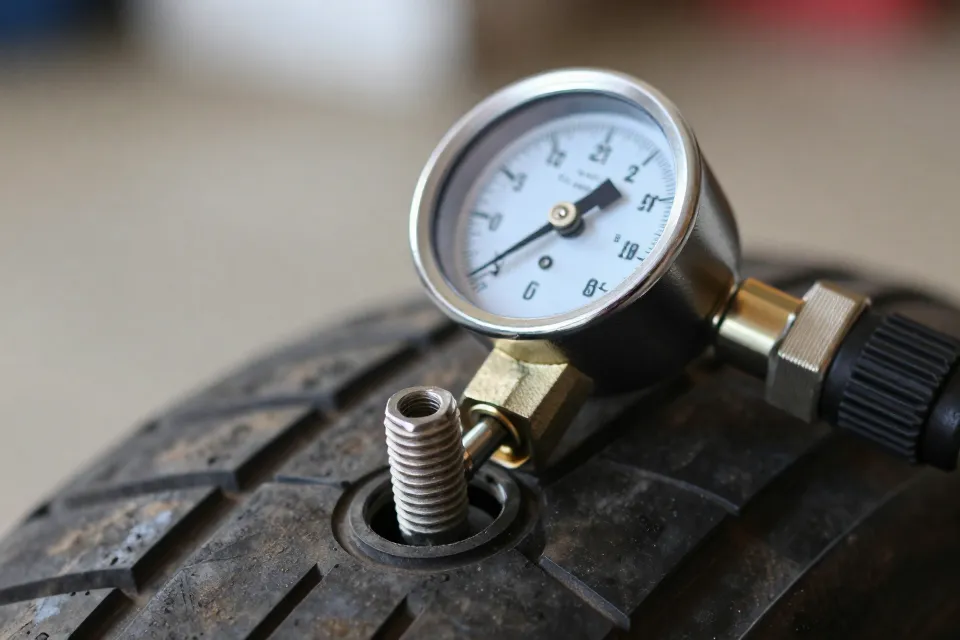
To find your numbers, look at the label on the driver's side door jamb, or open the owner's manual. Front and rear tires can require different pressures, so note both targets before starting (Bridgestone). Test each tire with a gauge — a simple pencil-style gauge or a digital one both work — pressing firmly onto the valve stem until the hissing stops, then read the value. If you top up at a gas station, the tires are probably hot; Bridgestone suggests adding about 4 psi above the cold target in that case and rechecking once they cool down. Avoid overfilling: an overinflated tire delivers less traction and can wear unevenly (Bridgestone). And remember the dashboard warning light is a backstop, not a plan — Firestone notes the TPMS light comes on once pressure has fallen enough to need inflation, so a monthly manual check catches slow leaks long before the light appears.
Here is a simple calendar that bundles the checks in this guide:
| Task | How Often | When to Do It |
|---|---|---|
| Pressure check | Monthly | Tires cold, same time each month |
| Visual inspection | Monthly | Same session as the pressure check |
| Penny or quarter test | Every few months | Before long trips and at each season change |
| Tire rotation | Every 5,000–8,000 miles | Pair it with an oil change |
| Professional inspection | Yearly | Annual service visit, or after any hard impact |
Tread Depth: What the Penny Test and the Quarter Test Tell You
The grooves in your tread are what push water out from under the tire. When they get shallow, the tire cannot clear the water quickly enough, and the car starts to skim instead of grip. In most US states, the legal minimum tread depth is 2/32 of an inch. The penny test checks that floor: hold a penny with Lincoln's head pointing downward, slide it into a tread groove, and if the top of his head is visible above the rubber, the tread has worn down to roughly 2/32 inch and the tire should be replaced (SimpleTire).
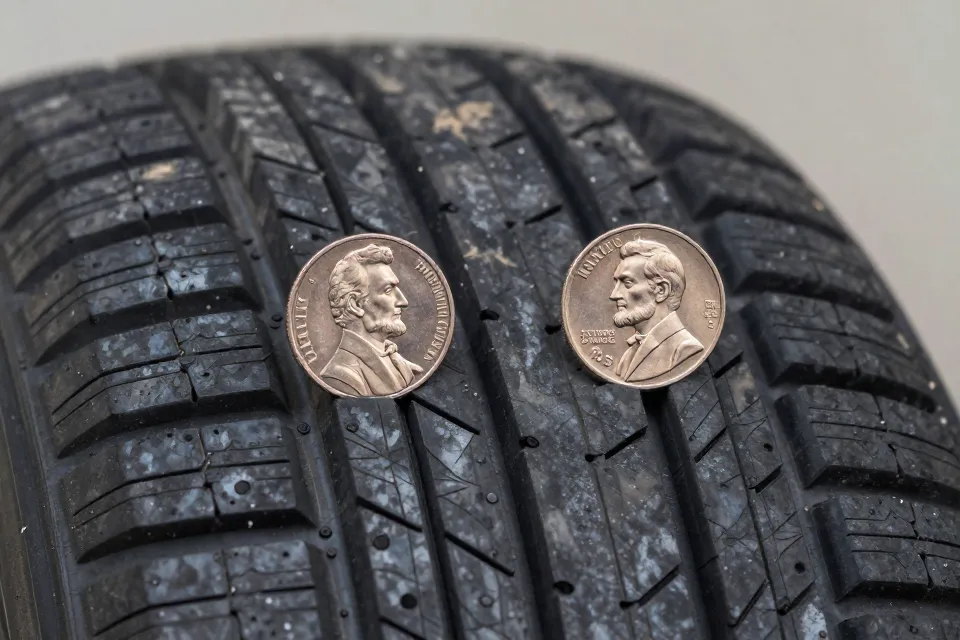
The quarter test is the stricter, wet-weather version. Insert a quarter with Washington's head pointing downward; if his entire head shows above the rubber, the tread is below approximately 4/32 of an inch — the level at which AAA recommends starting to shop for new tires, because that is where wet traction begins to fade. If your region sees regular rain, 4/32 is the smarter target than the legal minimum. Whichever coin you use, test several grooves across each tire — outer edge, center, and inner edge — since tires rarely wear evenly, and repeat the test every few months or before a long trip.
Tire Age: Decode the DOT Number on the Sidewall
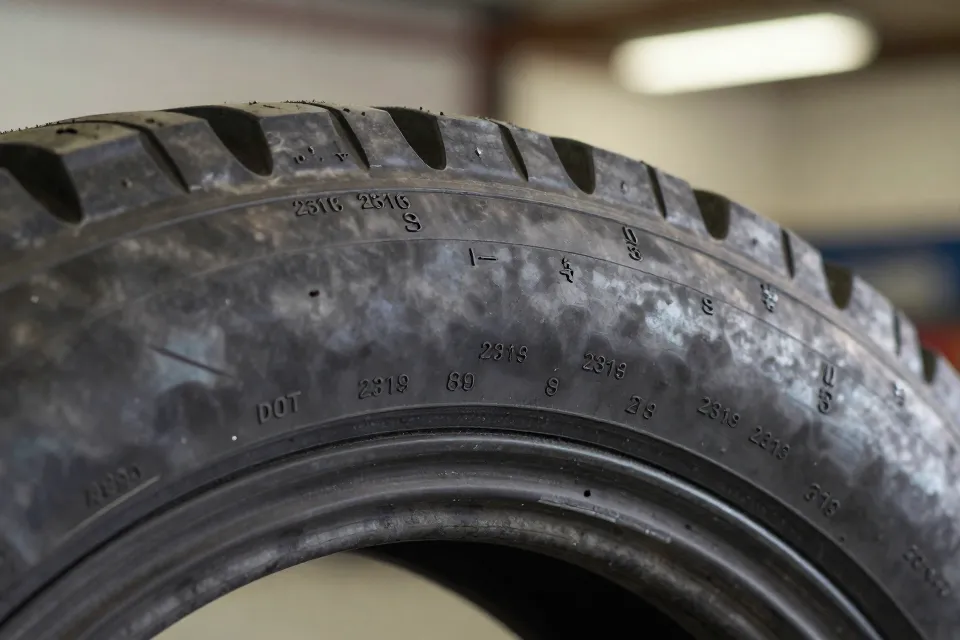
Tread depth is not the only clock running. Rubber ages even when it still has plenty of tread, which is why a tire can look almost new yet be risky on the highway. Every tire sold in the United States carries a DOT identification number stamped into the sidewall, and the last four digits reveal the build date: the format is WWYY — week, then year. A code ending in 2319, for example, means the tire was made in the 23rd week of 2019 (AAA).
The age guidance from the industry is consistent even though the wording varies. Vehicle manufacturers generally point to replacement around the six-year mark, tire-company warranties typically expire at six years, and tire manufacturers recommend that no tire be used beyond ten years from its build date, no matter how much tread remains. AAA's own recommendation is to replace tires at six years of age regardless of tread depth, and many shops will not service a tire that is more than ten years old (AAA). If you just bought a used car, decoding the dates on all four tires is one of the fastest safety checks you can do.
Rotation: Share the Wear Around the Car
Your front tires do more work than the rears. They take most of the steering load and, on most vehicles, a large share of the braking and weight as well, so they wear faster (Firestone). Rotation simply moves each tire to a different position so the whole set wears evenly: most rotation services shuffle the front pair to the rear axle and the rear pair to the front, and some vehicles also swap sides (Firestone).
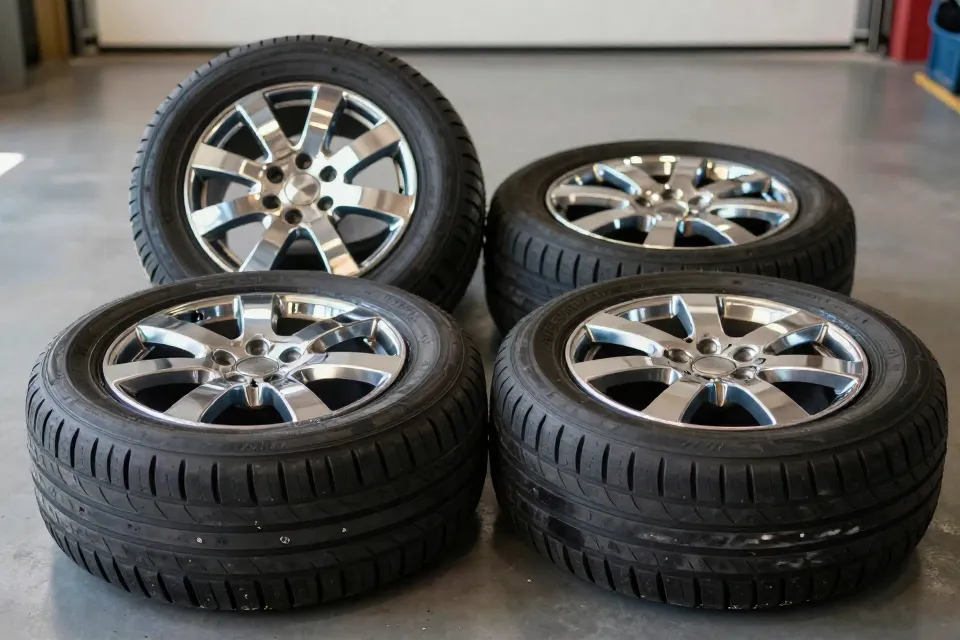
How often should you rotate? Most vehicle manufacturers recommend roughly every 5,000 miles or six months (Firestone), while AAA's routine-care guidance is in the 6,000 to 8,000 mile range. The easiest reminder is to pair rotation with every oil change (Firestone). Rotation patterns vary with the drivetrain, directional tires, and staggered wheel sizes, so the schedule in your owner's manual takes priority over generic advice.
Seasonal Tires vs. All-Season Tires
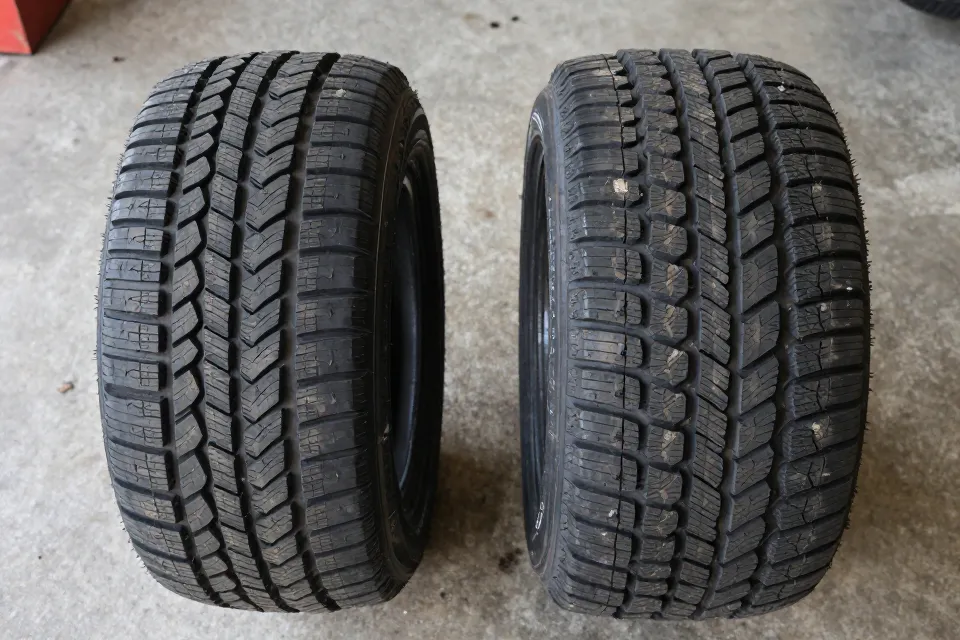
All-season tires are the default for good reason: in moderate climates they deliver year-round grip without the cost and hassle of swapping wheels twice a year (Continental). But all-season is a compromise, not a promise for deep winter. Winter tires use a softer compound that stays flexible in the cold, and Continental's rule of thumb is to fit winter tires when seasonal temperatures fall below about 7°C (46°F) and to switch back during warm months. A few regions even make winter tires a legal requirement, so check local rules before the first snowfall.
Tire Care Myths, Busted
| Myth | What the Experts Say |
|---|---|
| Any air is fine as long as the tire looks full | The recommended cold pressure for your vehicle appears on the door jamb sticker or in the owner's manual — that is the number to use (Bridgestone). |
| The TPMS light is my monthly reminder | The light appears only after pressure has dropped enough to need inflation; monthly checks catch slow leaks earlier (Firestone, Bridgestone). |
| Tread is all that matters | Rubber ages even with full tread, which is why the ten-year cutoff exists (AAA). |
| All-season tires handle snow like winter tires | All-season tires fit moderate climates; winter tires perform better on snow, ice, and cold wet roads (Continental). |
| Rotation is optional if wear looks even | Front tires carry more load and wear faster; rotation keeps the set even and extends its life (Firestone). |
Your Month-by-Month Tire Care Checklist
These five habits cover nearly every tire-care base:
- Once a month, cold: set all four tires to the door jamb pressure.
- Once a month: give each tire a visual once-over for bulges, cuts, or anything wedged in the tread, and mention anything odd to a pro.
- Every few months, plus before long trips: run the penny or quarter test in several grooves on each tire.
- Every 5,000–8,000 miles: rotate with the oil change, and add a yearly professional inspection.
- At every used-car purchase: decode the DOT dates and plan around the six-year mark, never past ten.
Want to test more car care skills? Browse the quiz library for quick practice.
Content on KnowHow Bench is for general information only. See our Disclaimer for details.