
How to Read Your Paycheck Stub: Taxes Explained Simply

Your pay stub lands in your inbox or on your desk every payday — and every time, it seems like the numbers don't match what you expected. The hourly rate or salary you agreed to never quite lines up with what shows up in your bank account. Maybe you build a household budget around one number, and the bank shows another. If that sounds familiar, you are in very good company.
Here is the good news: a pay stub is not a mystery. Once you know what the main sections mean, you can read any paycheck stub in about two minutes. You will understand why money comes out and how to fix it when too much or too little is withheld. This guide covers taxes and paychecks for education only — it is not personal tax advice.
Here is the road map: the two headline numbers, the tax buckets, the deductions you chose, your W-4, and the year-end W-2 form. A few minutes here can save you a real headache in April.
Gross Pay vs. Net Pay: The Two Numbers That Rule Every Check
Start at the top of the stub. Gross pay is the amount you earned in this pay period before anything is taken out. Paid by the hour? It is roughly your hours times your rate. Paid a salary? It is your salary divided by the number of pay periods in the year.
Net pay is what is left after every deduction — the number that lands in your bank account. People call it take-home pay. Do not think of gross and net as two different pays. Gross is your pay. The difference in the middle is taxes your employer holds for you, plus benefits you picked.
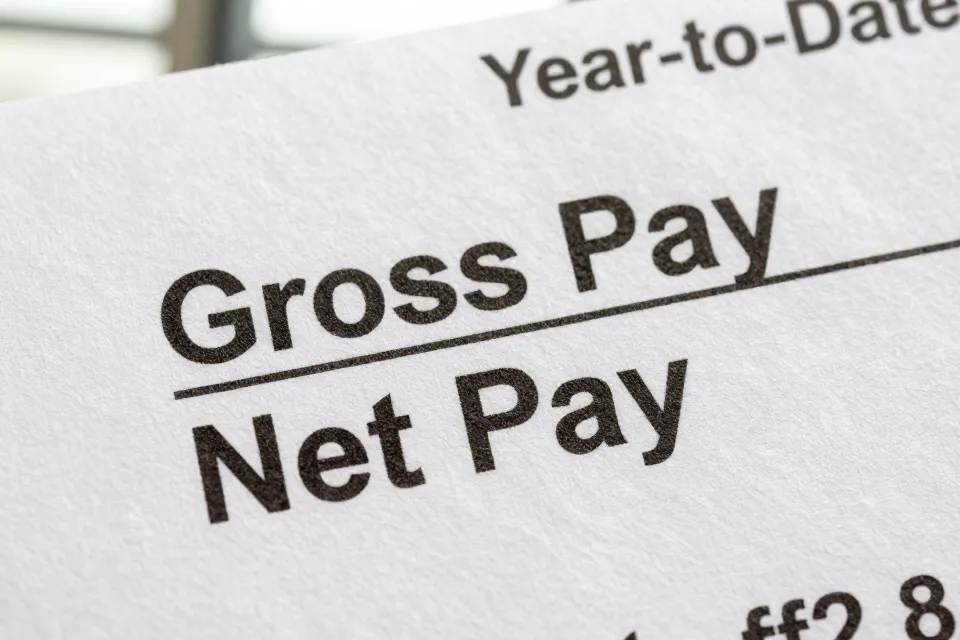
Quick example. Say your gross pay for one period is $1,000. Out of that come federal income tax, Social Security and Medicare, maybe state tax, a health plan premium, and a 401(k) contribution. What is left might land around $750 to $800. Those figures are only for illustration — your real numbers will differ.
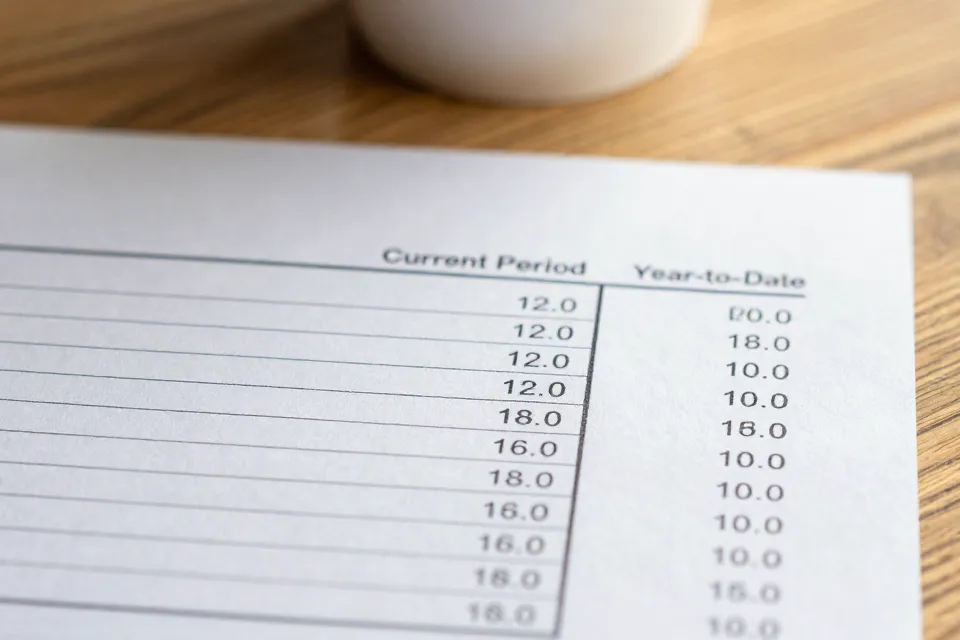
One more tip: find the Year-to-Date (YTD) column on your stub. It adds up every line since January 1. Payroll mistakes show up much faster when you compare the current period to the year-to-date totals.
The Three Tax Buckets: Where the Money Goes First
Taxes cause most of the gap between gross and net for most workers. In the United States, three kinds of taxes can come out of a paycheck: federal income tax, Social Security and Medicare (the FICA taxes), and state or local taxes.
Bucket 1: Federal Income Tax

Federal income tax is usually the largest federal withholding on your check. Your employer takes it out of each paycheck and sends it to the IRS in your name, according to the IRS. How much comes out depends mostly on two things: how much you earn and what you put on your W-4 form.
Bucket 2: Social Security and Medicare (FICA)
These are the taxes behind Social Security retirement benefits and Medicare health coverage. Together they are called FICA, and they are separate from your income tax. The rates are set in law. The current figures from IRS Tax Topic 751 (accessed 2026):
- Social Security — 6.2% of your wages, and your employer pays a matching 6.2%, for 12.4% total.
- Medicare — 1.45% of your wages, and your employer pays a matching 1.45%, for 2.9% total.
- There is a cap on the Social Security side. Only earnings up to the yearly wage base are taxed. The cap is $184,500 for 2026 earnings; it was $176,100 in 2025. Once your pay passes the cap for the year, Social Security withholding stops for that year.
- No cap on Medicare. Every dollar of covered wages gets the 1.45%.
- High earners: once your wages pass $200,000 in a calendar year, your employer must also withhold an extra 0.9% Medicare tax on top of the regular 1.45%.
Keep one thing in mind: the FICA tax rate can change, and the wage base cap moves almost every year. Before you lean on any of these numbers, check the current official tables on IRS.gov or SSA.gov for the year you are looking at.

Bucket 3: State and Local Taxes

Not everyone pays these. State income tax and local taxes come out only if your state, city, or county charges them — some states charge no state income tax at all. Rates and rules vary state by state, so there is no single number to memorize. The amounts withheld for the year appear on your W-2 form alongside the federal numbers (IRS Tax Tip 2023-82).
Deductions You Chose: Insurance, Retirement, and Other Lines
Once you get past taxes, most remaining deductions are benefits you signed up for. Health, dental, and vision insurance premiums come out of your pay. If your employer offers them, they are part of your benefits package — not taxes.
Retirement is the deduction many people forget to look at. If you put money into a traditional 401(k), it comes out of your pay before federal income tax is figured, and it is not reported as taxable income for that year (IRS 401(k) Plan Overview). That is why a 401(k) line on your stub can also make your federal withholding smaller. With a Roth 401(k), the money is included in your taxable income in the year you contribute (IRS 401(k) Plan Overview), so it does not lower your federal withholding now.

Other lines can appear too: union dues, or money a court ordered withheld, such as child support. If a deduction makes no sense to you, ask your payroll office — that is what they are paid to explain.

Your W-4 Is the Remote Control for Federal Withholding
Form W-4 is the sheet you fill out when you start a job. It tells your employer how much federal income tax to hold back from each paycheck (IRS, About Form W-4). The form asks about your filing status, your dependents, other income, deductions, and whether you want an extra amount taken out. Combined with what you earn, that sets your W-4 withholding.
There is no one right answer for everyone. Withhold too much, and you get a big refund in the spring — but you also let the government hold your money all year. Withhold too little, and you can owe at tax time, and in some cases you may face a penalty (IRS Tax Tip 2023-82). The goal is to land close to what you actually owe.

Your life changes: marriage, divorce, a new baby, a second job, a side gig, buying a home. The IRS suggests checking your withholding about once a year and after big life changes like these (IRS Tax Tip 2025-28). The free IRS Tax Withholding Estimator on IRS.gov tells you whether your current W-4 still fits. To use it well, have your latest pay stub, your most recent tax return, and your spouse's income information if you file jointly.

The Year-to-Date Column and Your Year-End W-2 Form
Your stub's YTD section is the running total since January 1 for every line: wages, each tax, each deduction, and net pay. If a health premium jumps or a 401(k) amount changes, YTD shows it at a glance.
At the end of the year your employer gives you Form W-2, usually in late January (IRS Tax Tip 2023-82). The W-2 form is the annual summary: all the wages you earned and all the tax withheld — federal, state, and local. It is the document most workers use to file their tax return.
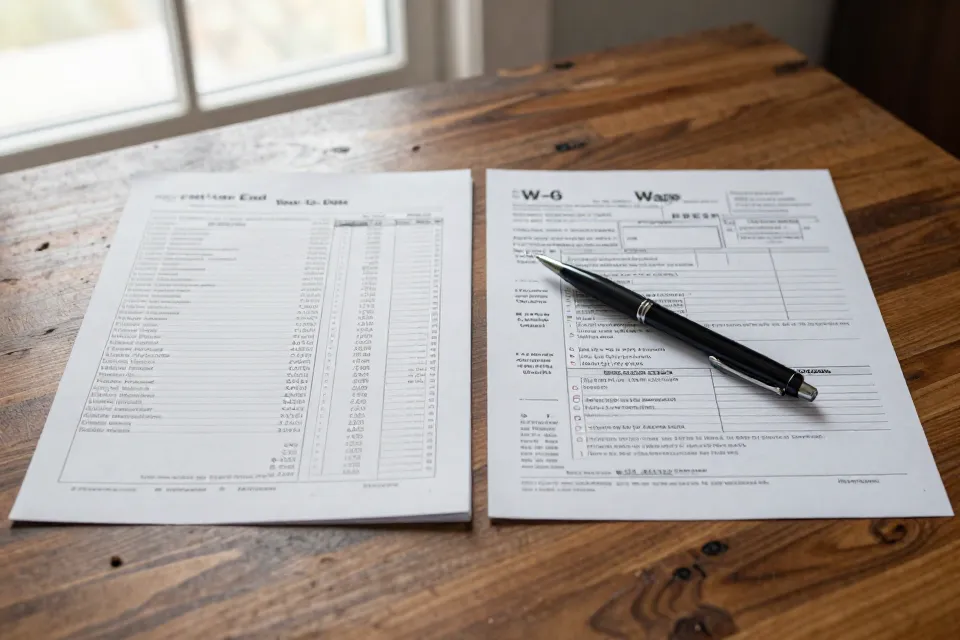
Before you file, compare the W-2 totals with the YTD numbers on your final stub of the year. They should line up. If something does not, talk to payroll before you file — it is much easier to fix a number before a return goes in than after.
Common Myths About Your Paycheck — and the Truth
| Myth | The truth |
|---|---|
| The net pay line is the only pay I'm entitled to. | Gross pay is your pay. The middle is taxes held for you plus benefits you chose. Your employer also pays a matching share of Social Security and Medicare on top of what you see. |
| Too much tax was withheld, so that money is gone. | Not gone. When you file your return, over-withholding comes back to you as a refund. It was your money the whole time. |
| A huge refund means I'm winning at taxes. | It usually means you overpaid during the year. Many people prefer a smaller refund and a bigger paycheck all year instead. |
| I filled out my W-4 once, so I'm done forever. | The IRS suggests reviewing your W-4 each year and after major life changes. |
| Only high earners need to check withholding. | Anyone with a new job, a second job, a marriage, a baby, or side income can drift off target. |
Your 10-Minute Paycheck Checkup
Here is a short routine you can run once a year and after big life changes, based on guidance from the IRS:
- Gather your latest pay stub, your most recent tax return, and your spouse's income info if you file jointly (IRS Tax Tip 2025-28).
- Check the math: hours times your rate, or salary divided by pay periods, should match your gross pay.
- Read every deduction line. If one looks wrong or new, ask your payroll or benefits office.
- Run the IRS Tax Withholding Estimator. If it suggests a change, give your employer an updated W-4.
- Repeat the whole checkup about once a year, plus after marriage, divorce, a new child, a new job, or a big income change (IRS Tax Tip 2025-28).
- In late January, grab your W-2 and compare it with your final stub's YTD totals before you file.
The Bottom Line
A pay stub is a receipt. It shows what you earned (gross pay), what came out (deductions), and what you kept (net pay). Three tax buckets — federal income, FICA, and state or local — plus the benefits you chose make up most of the difference. Your W-4 sets the federal dial, the year-to-date column helps you watch for changes, and the W-2 form ties it all together in January.

Rates and wage caps change every year, so always confirm the current year's official figures on IRS.gov or SSA.gov. This guide is educational only — if your own taxes are complicated, the next steps are the IRS estimator and a qualified tax professional. Want to test what you just learned? Browse the quiz library.

Content on KnowHow Bench is for general information only and is not tax or financial advice. See our Disclaimer for details.