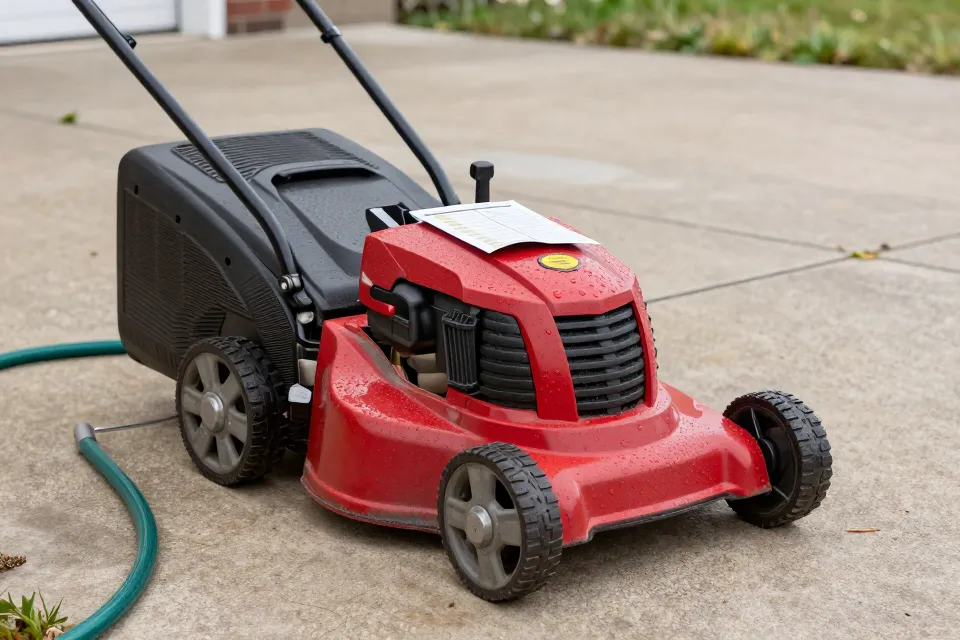
Lawn Mower Maintenance: Oil, Blades, Fuel, and Storage, Explained
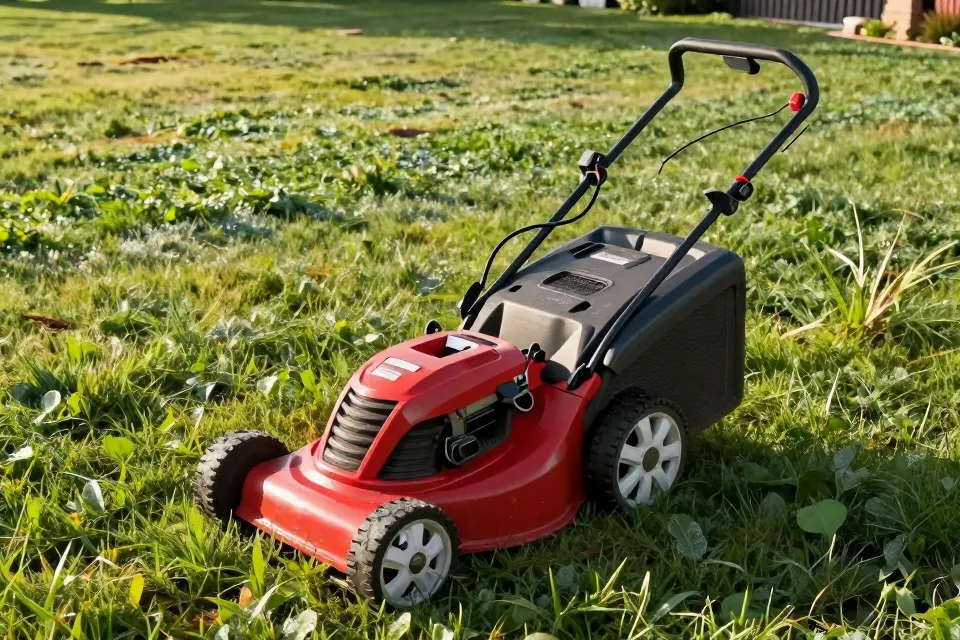
Few sounds say "Saturday morning" better than a lawn mower that fires up on the first pull. Halfway through the summer, though, the same machine often sputters, stalls, or leaves ragged brown streaks across the grass. Here is the good news: most mower trouble is not mysterious. It usually traces back to four plain causes — old oil, a dirty air filter, a dull blade, and gasoline that has sat too long. Each fix takes about fifteen minutes at home, and each one costs far less than a trip to the repair shop. This guide lays out the maintenance work that actually matters, the simple schedule to follow, and the safety rules worth memorizing, with every fact checked against a named source.
Why a Few Minutes Now Beats a Repair Bill Later
A push mower is not the most exciting thing in the garage, but it is one of the most used. Most mower owners never open the manual after the first mow of the season, which is exactly when small problems start quietly compounding. Skipped oil changes let grit grind through the engine. A clogged filter chokes the carburetor. A nick in the blade tears grass instead of cutting it, leaving the tired yellow tips that make a neat yard look shabby. There is an air-quality angle as well: the EPA estimates that gas-powered lawn mowers contribute about 5 percent of total U.S. air pollution, as Environment America reports — a tuned engine that starts on the first pull is better for the yard, the wallet, and the neighborhood.
A Maintenance Calendar for the Whole Season
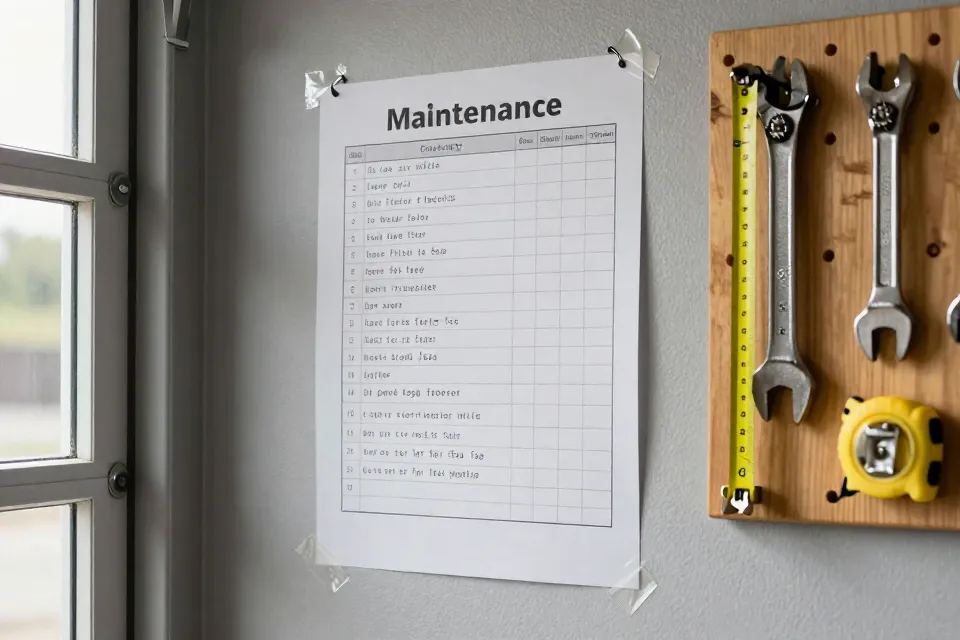
The table below bundles every task in this guide into one schedule. Print it, hang it on the garage wall, and the whole season fits into about an hour of total effort.
| Task | How Often | Best Time |
|---|---|---|
| Check oil level | Each use, when the engine is cold | Before every mow |
| Change oil | Every 50 hours of use or once a season | Spring and fall |
| Air filter | Check monthly; clean or replace once a season | Spring tune-up |
| Sharpen blade | About every 25 hours of cutting | Spring, then mid-summer |
| Replace blade | When bent, cracked, deeply nicked, or thin | Same session as sharpening |
| Spark plug | Once a season | Spring tune-up |
| Fuel | Stabilize or drain before long storage | End of season |
Oil: The Engine's Lifeline
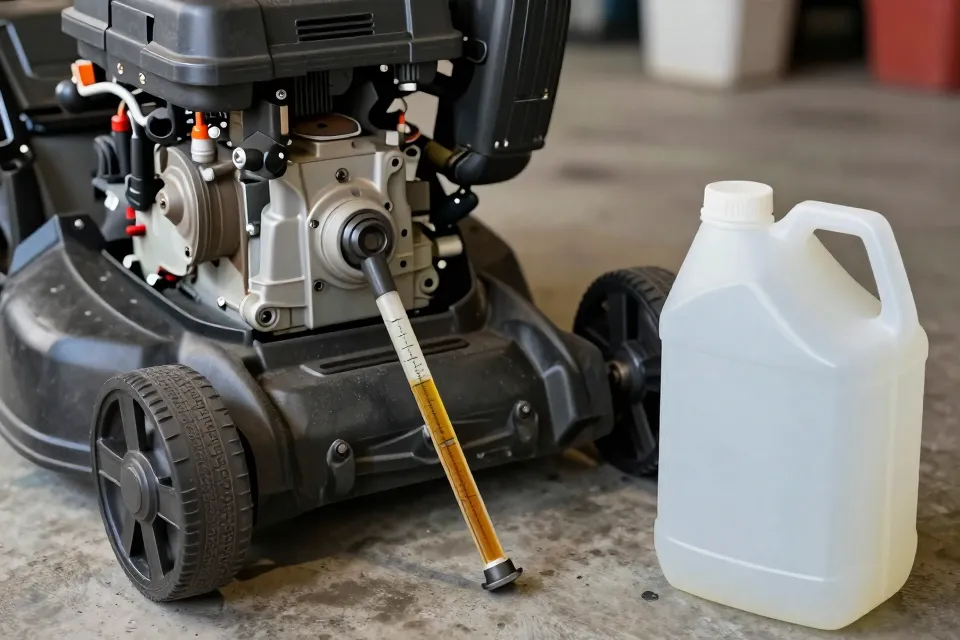
Most push mowers sold in the United States use four-cycle engines, which hold oil in a separate reservoir you check with a dipstick — the same idea as a car, just smaller (The Spruce). Two-cycle engines, the kind on many trimmers and blowers, work differently: the oil is mixed into the gasoline, so there is no dipstick at all. For a four-cycle mower, the usual guidance is to change the oil once a season or about every 50 hours of operation (The Spruce). Run the engine for a few minutes first so the old oil warms up and flows out faster, drain it into a pan, and drop the used oil off at an auto parts store for recycling. Typical summer choices are SAE 30 and 10W-30, but the type printed in your owner's manual always wins (The Spruce). Most mower owners find the whole swap takes under fifteen minutes.
Air Filters and Spark Plugs: Small Parts, Big Payoff
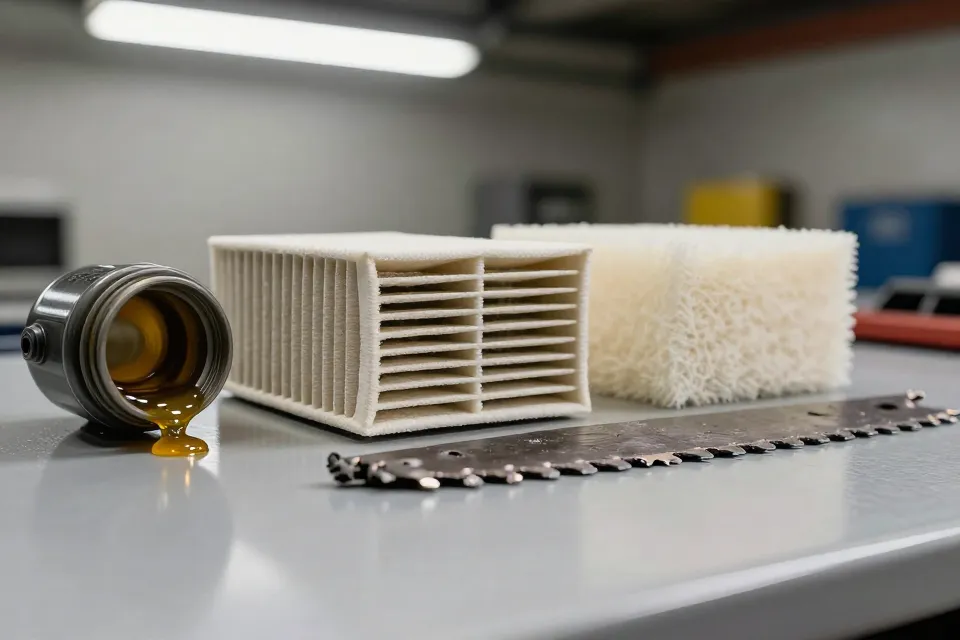
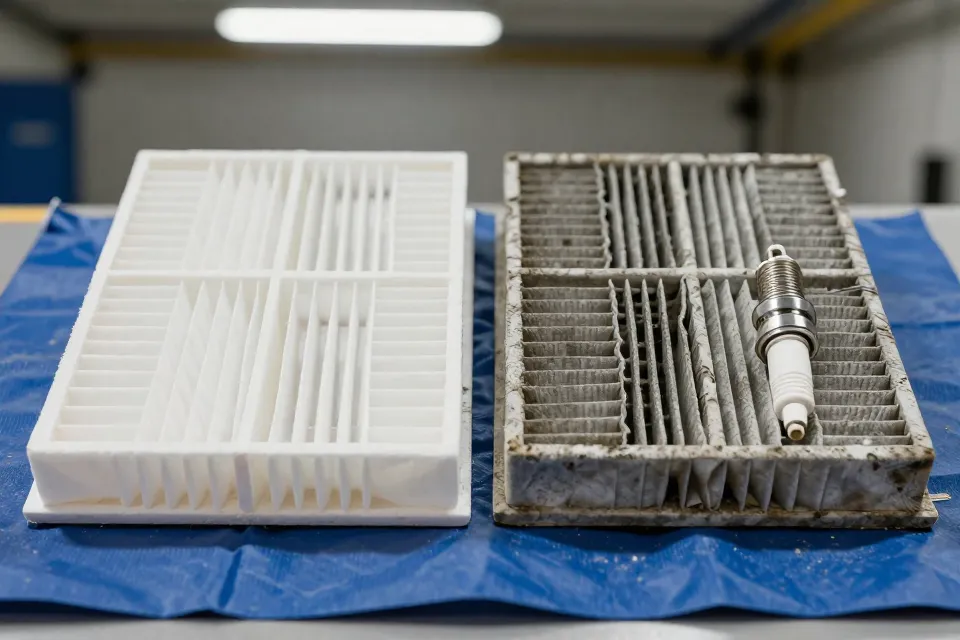
The air filter and spark plug are cheap parts that quietly decide how well the season goes. A dirty filter starves the engine of air, and the motor responds by running rough, using more gas, and blowing more smoke. Foam filters can be washed in soapy water, dried, and lightly re-oiled; paper filters are simply replaced — once a season is the usual rhythm (The Spruce). If your yard is dusty or the summer turns dry, check the filter every few weeks instead of monthly. The spark plug gets the same seasonal treatment: install a fresh one during the spring tune-up so the mower starts readily all year (The Spruce). Two small parts, a few dollars, and a noticeably easier pull the next Saturday morning.
Blade Care: The Difference Between Cutting and Tearing
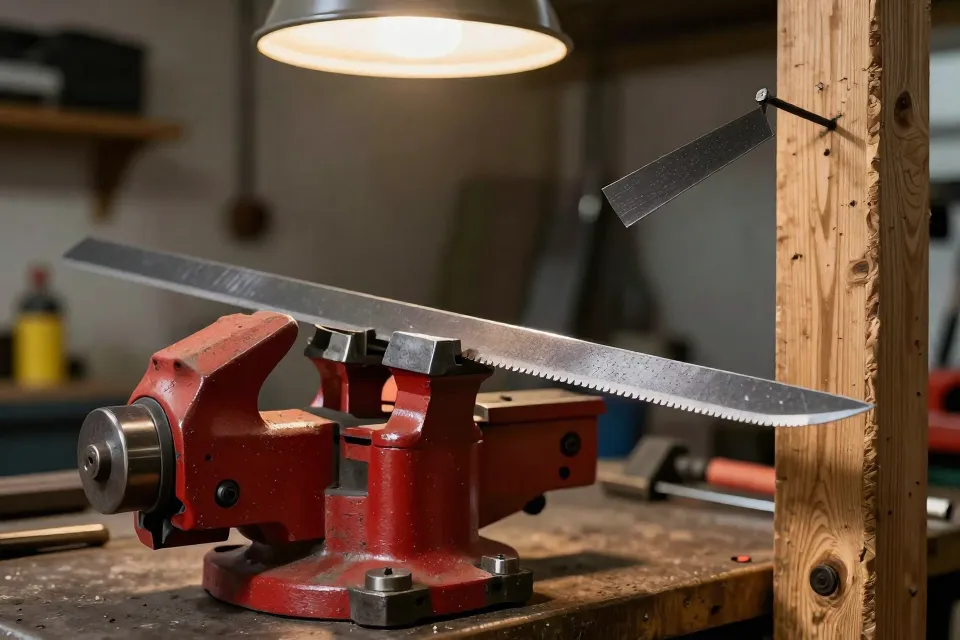
A sharp blade cuts grass cleanly. A dull one tears it, shredding the leaf tips, which then dry out and turn brown — usually the first sign anyone notices (Family Handyman). The fix is straightforward: sharpen the blade about once or twice a season, which works out to roughly every 25 hours of mowing (Family Handyman). The safe sequence is short: disconnect the spark plug wire, tip the mower with the air filter side up, unbolt the blade, clamp it in a bench vise, and file the edge at its original angle, taking the same number of strokes off each end. Then check the balance by hanging the blade on a nail through the center hole; if one side dips, take a little more metal off that side (Family Handyman). Reinstall the blade with the cutting edge facing the correct direction. Replace the blade entirely when it is bent, cracked, deeply nicked, or worn too thin to sharpen — a bent blade vibrates, and an out-of-balance blade is hard on the engine's crankshaft (Family Handyman).
Gasoline: Pick It Carefully, Don't Let It Sit
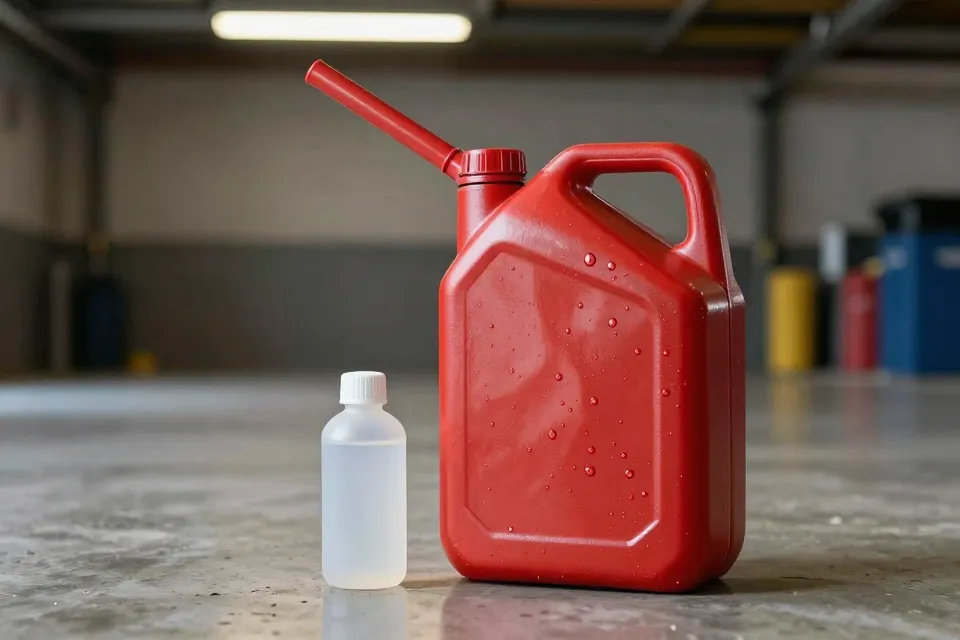
Most pump gasoline in the United States today contains about 10 percent ethanol and is sold as E10, and in some regions pumps also offer E15 (535 Media). Small engines such as mowers are not built for the higher blend, so the safest rule is to use E10 or ethanol-free gas and skip E15 entirely (535 Media). There is a second problem: ethanol attracts moisture, and gasoline that sits in a tank for months can gum up carburetor parts and make the engine hard to start next spring (535 Media). Most mower owners dodge the whole issue by finishing the season with one of two habits — add a fuel stabilizer and run the engine for a few minutes, or drain the tank and let the engine run until it dies on empty. Ethanol-free gas costs more at the register, but it does not go stale, which is why some owners save it for the final mow of the year.
End-of-Season Storage: Winterizing in Four Steps
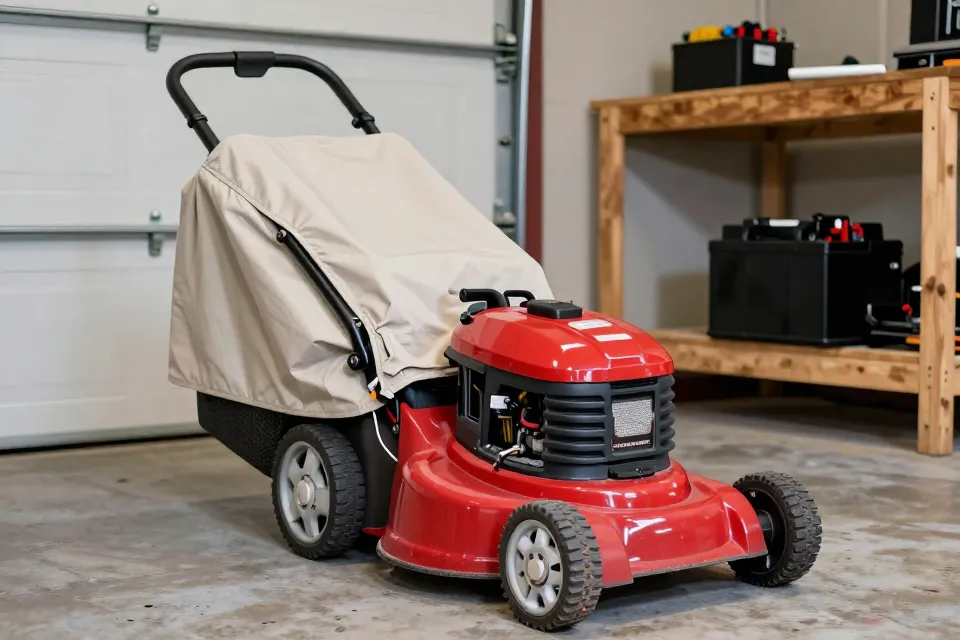
The way you park the mower in the fall decides how it greets you in the spring. LawnStarter's storage guidance boils the job down to a short list: deal with the fuel first (stabilize it or run the tank dry), change the oil so the engine sits on fresh lubricant, clean under the deck, and, on riding mowers or anything with a battery, remove the battery and store it indoors where it stays warmer (LawnStarter). A dry shed or a corner of the garage keeps rain and rust away, and a cover keeps dust off the air filter. If you mow into late fall, do the winterization after the last cut, not before it.
Lawn Mower Safety: Rules Worth Memorizing
Mowers are powerful tools, and the blade spins fast enough to cause serious injury. The safety guidance from the U.S. Consumer Product Safety Commission (CPSC) is easy to follow once you know it:
| Situation | The Safe Move | Why It Matters |
|---|---|---|
| Clearing a clogged chute or grass under the deck | Stop the engine and pull the spark plug wire first | The blade stores energy and can spin even after the engine stops (CPSC) |
| Any repair or adjustment | Disconnect the spark plug wire before touching anything | The engine cannot fire up accidentally while your hands are near the blade (CPSC) |
| Before the first pass | Walk the yard and pick up rocks, sticks, and toys | Thrown debris is a leading cause of mower injuries (CPSC) |
| While the mower runs | Keep children and pets indoors; hands and feet stay clear of the deck | Blades cut at high speed and stop slowly (CPSC) |
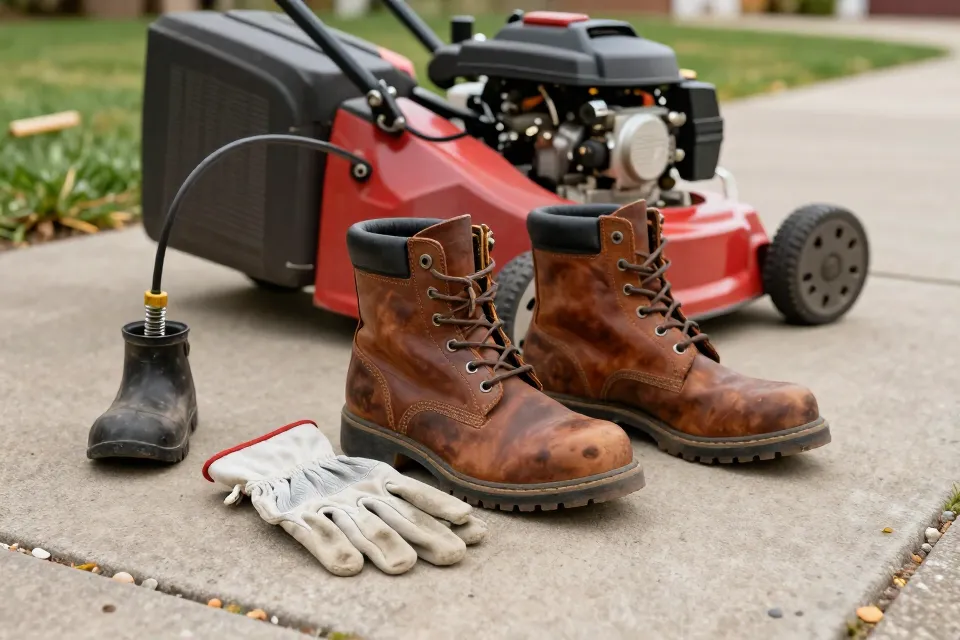
| Footwear and clothing | Sturdy shoes, long pants, no sandals or loose sleeves | The blade can catch fabric and skin quickly (CPSC) |
| Crossing a driveway or path | Release the blade control and wait for the blade to stop | Momentum carries the blade after the engine slows (CPSC) |
Most mower owners also confirm that every guard and deflector is still in place; removing a safety device to save a few seconds is the fastest way to end the season in the emergency room.
A Five-Step Spring Tune-Up
When the grass starts growing again, this five-step routine covers the basics in under an hour:
- Change the oil and check the dipstick.
- Clean or replace the air filter and install a fresh spark plug.
- Sharpen and balance the blade, or replace it.
- Fill the tank with fresh E10 or ethanol-free gas.
- Rinse the deck and check the wheels, cables, and fasteners.
Want to test more practical home skills? Browse the quiz library for quick practice.
Content on KnowHow Bench is for general information only. See our Disclaimer for details.