
Your First Week at a New Job: 10 Things to Do

Feeling nervous about your first week at a new job? You are not alone. Most of us walk into a new building feeling like a stranger, with new faces, new systems, and a new way of doing things. Here is the good news: the first week does not decide your whole career. It decides your start. And a strong start is something you can plan. This guide shares 10 simple, practical things to do, from the night before day one to your Friday wrap-up. Every step is short, and each one is backed by advice from career experts. You don't need to be perfect. You just need a plan.
1. Get Ready the Night Before Day One
What you do the night before sets the tone. Three small moves save you a lot of stress. First, go to bed at a normal hour. A tired brain forgets names and makes simple tasks feel twice as hard. One full night of sleep beats one extra hour of prep. Second, if you can, test your commute on the day before. Drive or ride the route at the same time you will travel, and check the parking and the building entrance. Many experienced workers say this one dry run removes most of the morning panic. Third, lay out your outfit. When in doubt, dress one notch more formal than you think you need. You can match the team's style after you see it for yourself. Pack a notebook, a pen, your ID or documents, a water bottle, and a phone charger.

2. Run Your First Morning Like a Checklist
Keep day one simple: arrive a little early, about ten or fifteen minutes, and give yourself time to settle in. Punctuality makes a strong first impression, and being late sends the wrong signal before you even speak. Wear clothes that fit the dress code, and stay professional until you know the norm. Then deal with the basics. Find out where the coffee, the printer, and the restroom are. Set up your workspace, and ask for your computer and accounts right away. Logins and access can take time, so start that process early. Also ask who to contact when something breaks. Do not forget the person who greets you, often in HR or at the front desk. That person usually knows everything, from where the forms go to how the office really runs.

3. Carry a Question List
Questions are your best tool in the first week, and people expect them. Onboarding is built around questions, so this is the one time in a job when asking too much looks right. Write your questions down ahead of time, keep the list with you, and add to it all week. Ask in small batches instead of one huge dump. When you get an answer, repeat it back in your own words to make sure you got it. For example: "So you'd like this done by Friday and sent to Sara, right?" That short confirm saves you from doing the wrong task all week. Save the big questions for your manager, and save the small ones for teammates.

4. Learn Who's Who
Your manager is your most important person in week one. Introduce yourself early, and ask what matters most in your first weeks. Also ask for a list of the key people you should meet. Then start learning names. Say a name back when you hear it, and write it down with a note about the person's role. People notice when you use their name later, and it builds trust fast. Grab coffee or lunch with one teammate at a time, and ask about their job instead of small talk. Finally, set up regular short check-ins with your boss. A weekly one-on-one beats a single welcome chat, and it gives you a safe place to ask anything.

5. Spot the Unwritten Rules
Every team has rules that no one writes down. Find them early, and week one gets much easier. Start with communication: ask whether the team prefers chat, email, or quick meetings. Next, watch the hours. When do people actually arrive? When do they leave? Is it normal to step out for lunch, or do people eat at their desks? Ask how time off is requested before you ever need to use it. Also learn the meeting style. Are questions welcome out loud, or does the team prefer follow-ups in writing? The simplest method is to copy the people who do well. Their habits are the unwritten rules in action.

6. Set One Two-Week Goal
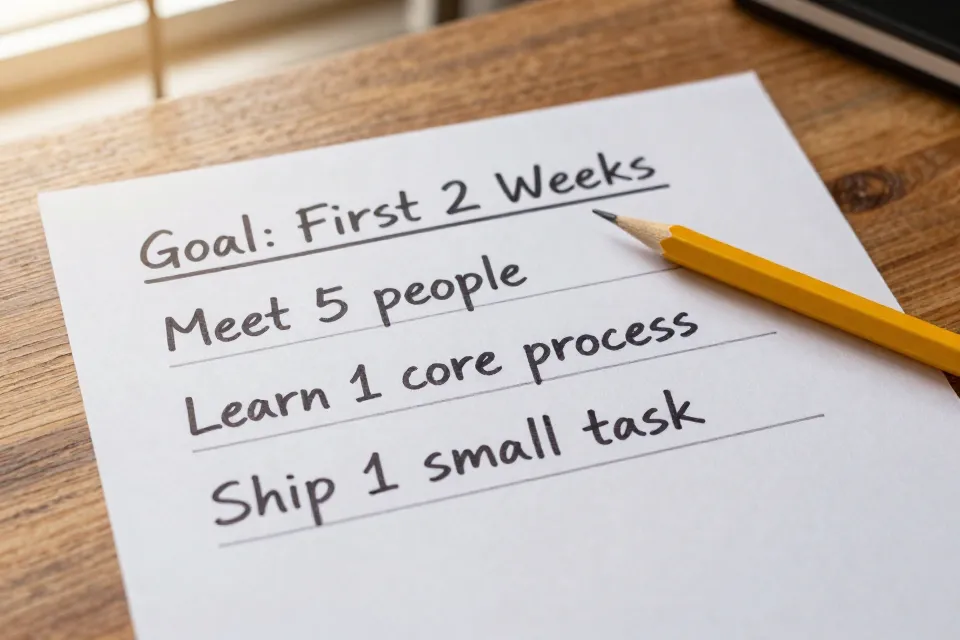
You don't need a list of ten goals. You need one clear goal for your first two weeks. Ask your manager: "What would success look like after my first two weeks here?" That single question will guide your week. Break the answer into small steps, such as meet five key people, learn one core process, and finish one small real task. Write the goal down and check it each morning. At the end of week one, sit down with your manager and adjust. Seeing the goal clearly turns a scary blur of tasks into a short, doable list.
7. Survive Information Overload
Expect a flood of names, systems, passwords, and policies. That is normal, and it happens to everyone. Do not try to memorize any of it. Write it all down in one notebook or one note app, so you know where to find it later. Ask for important documents in writing, like policies and how-to guides, so you can reread them at your own pace. Sort everything into two piles: what you need this week, and what is nice to know later. Then let the second pile wait. Learning a new job takes weeks, not days, so be patient with yourself.
8. First-Week Myths: What People Get Wrong
| Myth | Truth |
|---|---|
| I must prove myself by working crazy hours. | Steady, reliable work beats burnout. Rest keeps your brain sharp for week two. |
| Asking questions makes me look weak. | Companies expect questions in your first weeks. Quiet guessing looks worse. |
| I need to know everything by Friday. | Ramping up takes weeks. Knowing what matters right now is the real skill. |
| I should stay out of the way. | Visible, curious new hires build better ties. Hiding slows your start. |
| One mistake and I'm done. | Small early mistakes are normal and fixable. Fix it, tell your manager, and move on. |
9. Your First-Week Checklist
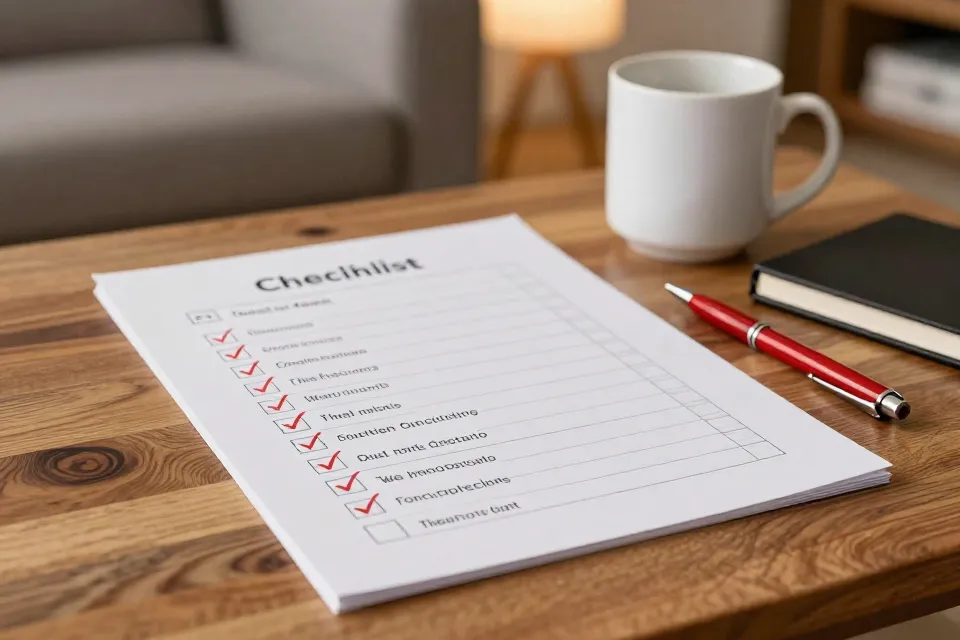
- Slept well, outfit set out, commute tested
- Arrived early and dressed right
- Workspace and computer accounts working
- Question list started and asked
- Met your manager and booked a check-in
- Learned five names with notes
- Had one coffee or lunch with a teammate
- Found the team's unwritten rules
- Two-week goal written down
- All notes kept in one place
10. Friday: Look Back and Look Ahead
On Friday afternoon, take ten quiet minutes. Review what you learned. Write down what still confuses you, and turn it into two questions for Monday. Then congratulate yourself. Week one is done. The goal is progress, not perfection, and you have already made a start. New job nerves fade faster when you plan the week, ask good questions, and build real connections. If you want to keep leveling up your career skills, check out the quiz library for more quick practice. Content on KnowHow Bench is for general information only. See our Disclaimer for details.