
Kitchen Food Safety: 10 Rules Every Home Cook Should Know
Raise your hand if you have ever wondered exactly when those dinner leftovers stop being safe to eat. Most home cooks cannot say, and that is perfectly normal. Food poisoning sends about 128,000 Americans to the hospital each year, and roughly 1 in 6 of us gets sick from food in a given year. The good news: most of these illnesses are easy to prevent. The rules come from the USDA, the CDC, and the FDA, the agencies that study foodborne illness for a living. Test your kitchen smarts while dinner is still on your mind → browse the quiz library. Then measure your habits against the 10 rules below, ordered the way food really moves through a home: from the shopping cart to the dinner table.
Rules 1 and 2: From the Store to the Fridge, Keep Raw Meat Alone
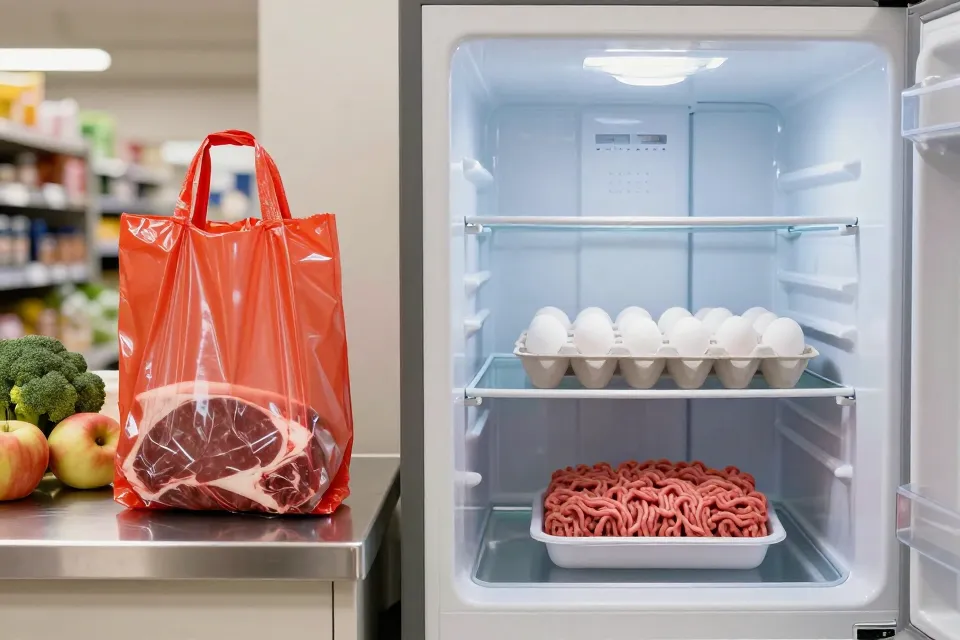
Rule 1: Separate raw meat from everything else, starting at the store. Raw meat, poultry, and seafood carry juices packed with germs. Those juices can land on other food and make people sick. In your cart, keep raw packages away from produce and ready-to-eat food. Use the plastic bags at the checkout for packages of raw meat, and keep them in their own grocery bag on the way home.
Rule 2: Seal raw meat in the refrigerator too. Wrap raw meat, poultry, and seafood securely, or put them in covered containers, so their juices cannot drip onto other food. Store eggs in their original carton in the main part of the fridge, not in the door, where the temperature swings the most.
Rules 3 and 4: Clean Hands, Clean Tools
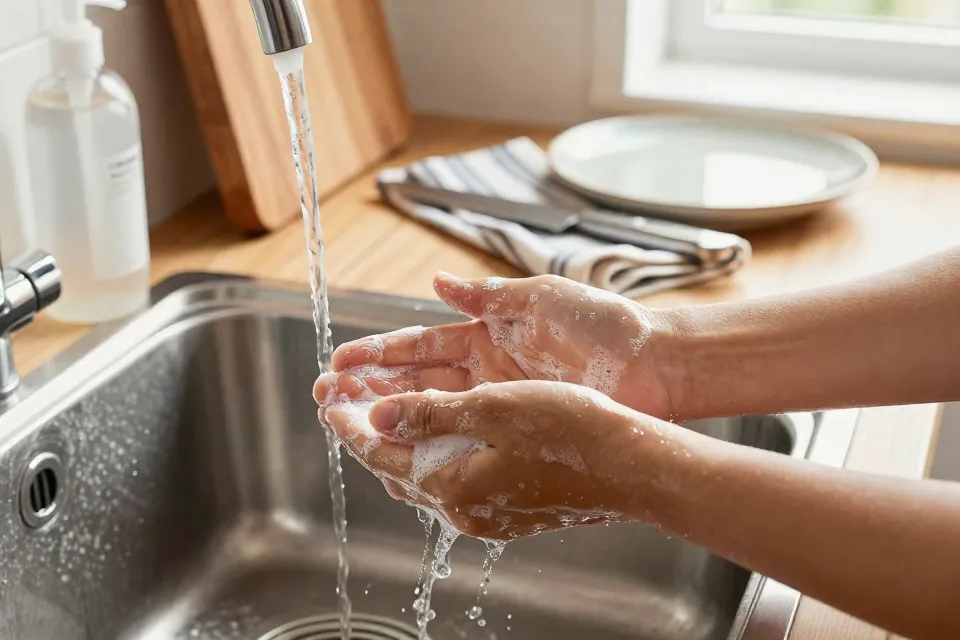
Rule 3: Wash your hands with soap and water for a full 20 seconds. Think of it as humming the Happy Birthday song twice. Do it before, during, and after you cook, and again after touching raw meat, chicken, fish, or eggs. Scrub the backs of your hands and under your nails. The extra seconds make a real difference.
Rule 4: Wash your tools and counters after every food. Use hot, soapy water on cutting boards, knives, plates, and countertops, especially after raw meat, poultry, seafood, or eggs touched them. Toss dish towels into the washing machine on the hot cycle often. Rinse fresh fruits and vegetables under running water, scrub firm produce like melons with a clean brush, and dry with a clean towel.
Rule 5: Give Raw Meat Its Own Cutting Board
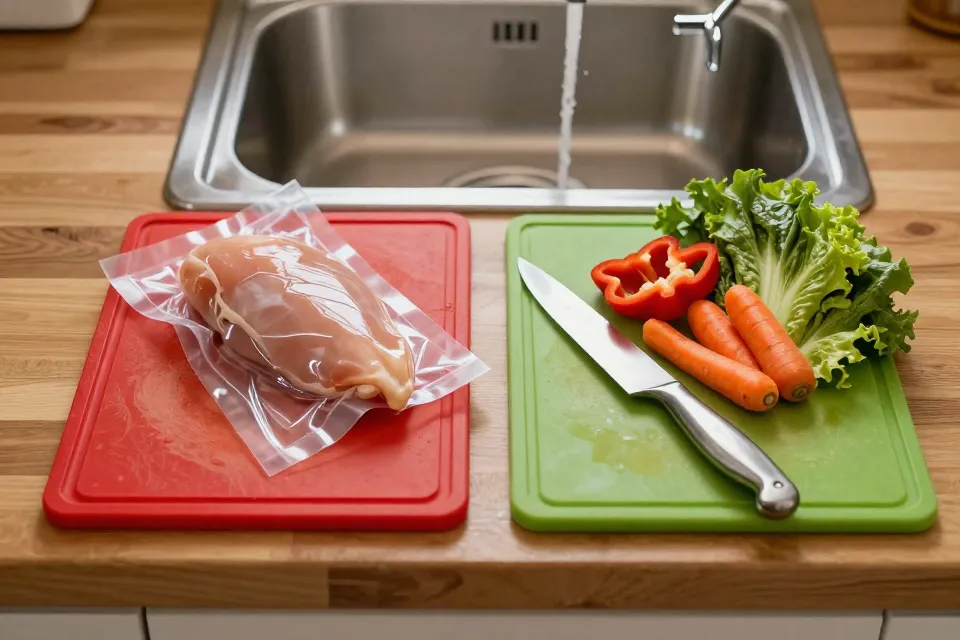
Use one cutting board for raw meat, poultry, and seafood. Use a different board for produce, bread, and anything you eat raw. Do the same with plates and platters. This two-board habit stops raw juices from ever touching food that will not be cooked. Replace boards once they get worn, because scratches can hide germs.
Rule 6: Do Not Wash the Chicken (or Any Raw Meat)
Rinsing raw chicken might feel right, but it does more harm than good. The splashes, even the tiny ones you cannot see, spread germs across your sink, your counter, and your hands. The same goes for raw eggs, fish, and other raw meat. Washing does not kill germs. Cooking does. Skip the rinse and go straight to the pan.
Rule 7: Cook to the Number, Not to the Color
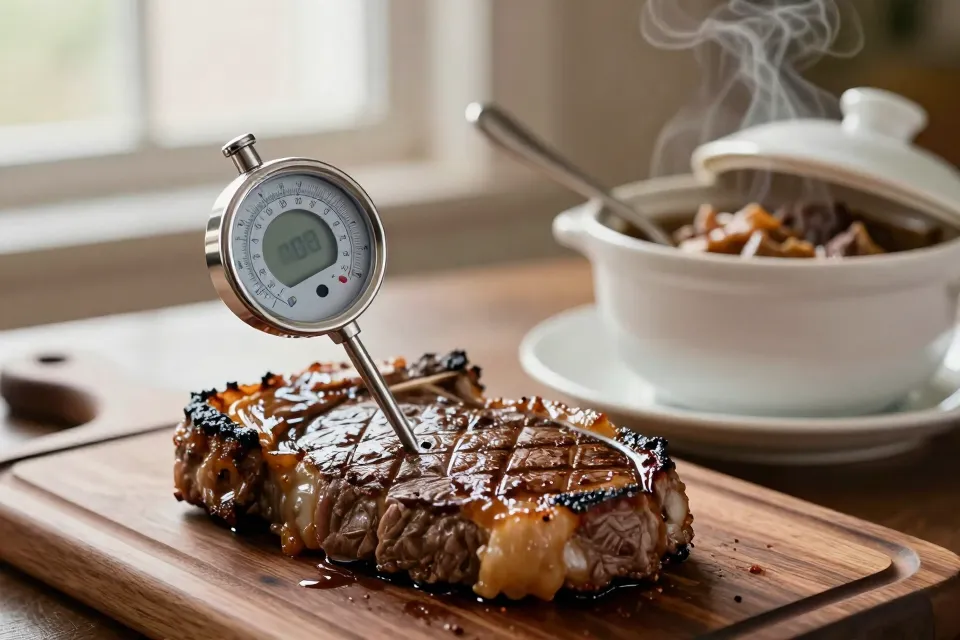
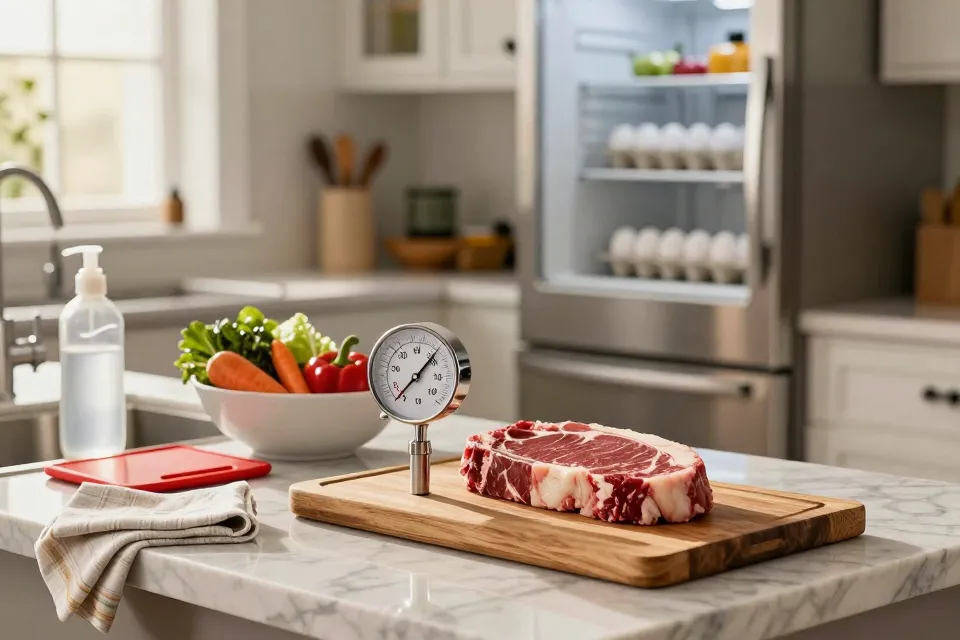
You cannot tell if meat is done by looking at it. Color is not a reliable test. The only reliable test is a food thermometer: put it in the thickest part of the food, away from bone, fat, or gristle, and cook until the number matches the chart below.
| Food | Safe minimum internal temperature |
|---|---|
| Beef, pork, veal, lamb steaks, chops, roasts | 145 F (then rest 3 minutes) |
| Ground beef, pork, veal, lamb | 160 F |
| All poultry, including ground chicken or turkey | 165 F |
| Fully cooked ham (to reheat) | 140 F if USDA-packaged, 165 F for all others |
| Eggs | 160 F |
| Fish and shellfish | 145 F |
| Leftovers and casseroles | 165 F |
That 3-minute rest matters. It lets the heat finish the job in whole cuts like steak and pork chops. For fish with fins, there is a simpler test: fish is done when the flesh is opaque and flakes apart easily with a fork. Microwave meals deserve the same care. They cook unevenly, so follow the package directions, stir the food in the middle of heating, and let it sit for the standing time before checking the temperature. Reheated food should hit 165 F. If your microwave is low wattage, use the longer cooking times; if it is high wattage, use the shorter ones.
Rule 8: Respect the Danger Zone and the 2-Hour Rule
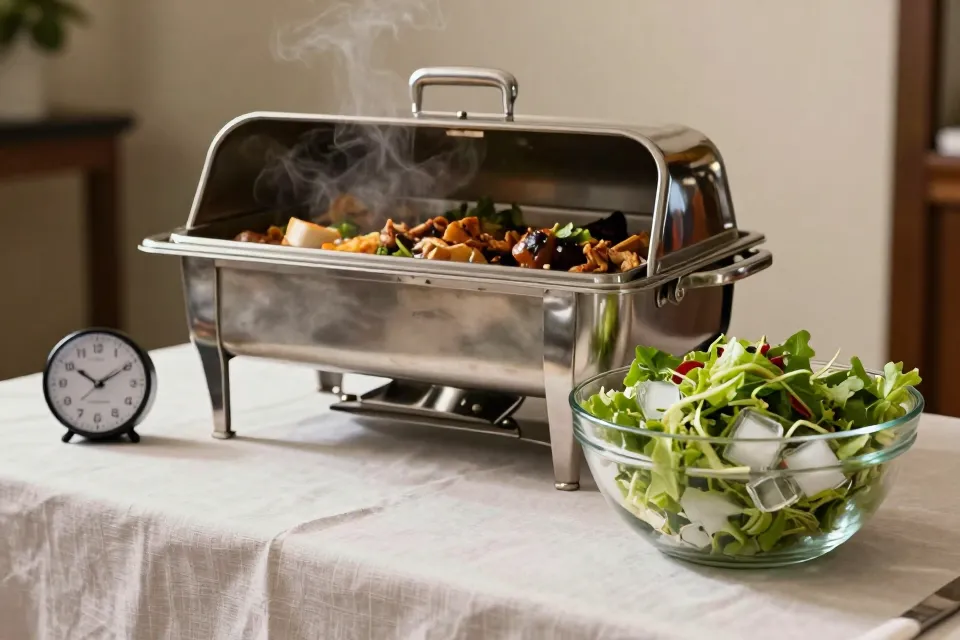
Bacteria grow fastest between 40 F and 140 F. Experts call this range the Danger Zone. Food that stays in the Danger Zone too long can make you sick. So perishable food should not sit out at room temperature for more than 2 hours, and only 1 hour when it is hotter than 90 F outside, like in a hot car or at a summer picnic. The USDA, the CDC, and the FDA all give the same numbers.
The clock keeps running while you serve. Hold hot food at 140 F or hotter with the help of warming trays, slow cookers, or chafing dishes. Keep cold food chilled in bowls of ice. Note the time the food came out, and when 2 hours are up, pack it away or toss the rest. The same idea covers marinades: soak meat in the fridge, not on the counter.
Rule 9: Leftovers: Cool Fast, Store Right, Reheat Hot
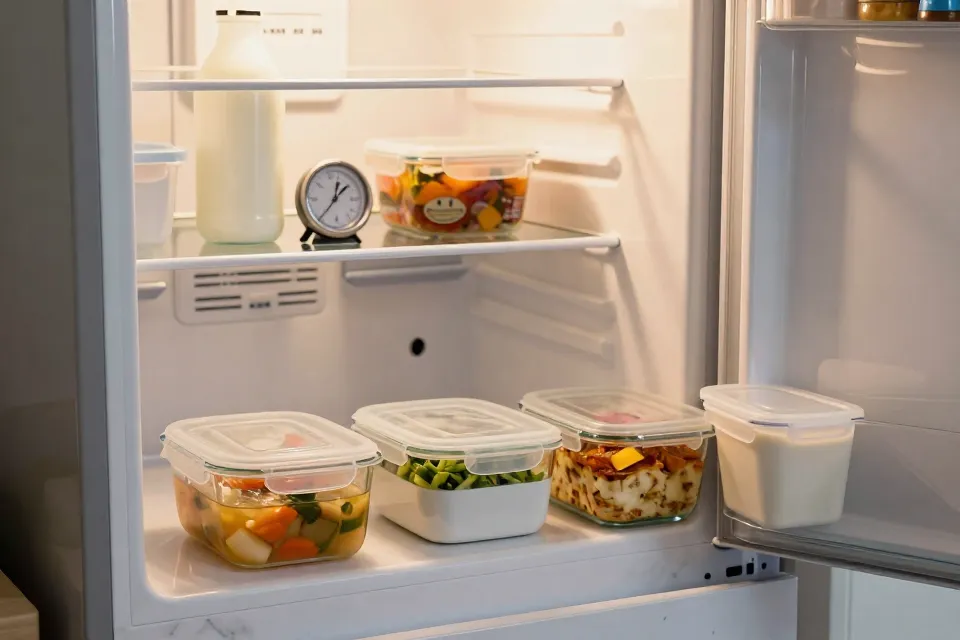
Leftovers go in the fridge within 2 hours of cooking. Big pots cool far too slowly. Divide soup, stew, and casseroles into shallow containers so they chill fast. Good news for busy cooks: hot food can go straight into the refrigerator. Small portions chill faster there. Waiting on the counter for food to cool first is an old habit that just eats your safe window.
Keep your refrigerator at 40 F or below and your freezer at 0 F or below. If your fridge has no built-in thermometer, put an appliance thermometer inside. Leftovers keep for 3 to 4 days in the refrigerator. In the freezer they keep for 3 to 4 months, and they stay safe even longer, though taste and texture fade. Remember: freezing does not kill germs, it only puts them to sleep.
When reheating, bring leftovers back to 165 F and check with your thermometer. Reheat soups, sauces, and gravies until they come to a rolling boil. Cover the food, stir or rotate it, and check the temperature in more than one spot. Microwaves have cold spots, so one reading is not enough.
Rule 10: Thaw the Safe Way
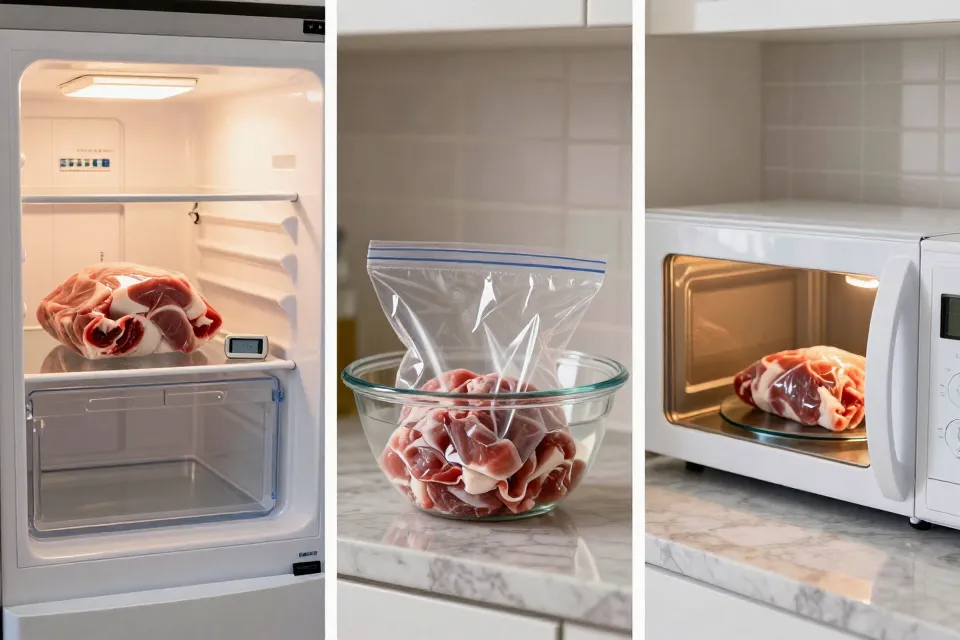
You have three safe choices for defrosting frozen meat and leftovers: the refrigerator, a bowl of cold water, or the microwave. The refrigerator is the slowest but safest method, since the food stays cold the whole time. Cold water is faster: keep the food in a leak-proof bag and keep it submerged. Microwave thawing is fastest of all. Never defrost on the countertop, where the outside warms into the Danger Zone while the middle stays frozen, which is the perfect setup for germs.
Kitchen Myths, Busted
| Myth | The truth |
|---|---|
| Washing raw chicken makes it cleaner. | Washing spreads germs around the sink and counter. Cook it to 165 F instead. |
| Meat is done when its color looks right. | Only a thermometer can tell you it is safe. |
| Hot food must cool on the counter before refrigerating. | Put leftovers away within 2 hours. Small portions of hot food chill fastest in the fridge. |
| Freezing kills the germs. | Freezing stops germs from growing, but it does not destroy them. |
| A cooked meal is safe as long as it has been out less than 2 hours. | The same clock runs during serving. Hold hot food at 140 F or hotter and track the time. |
Extra Caution: Who Should Be More Careful
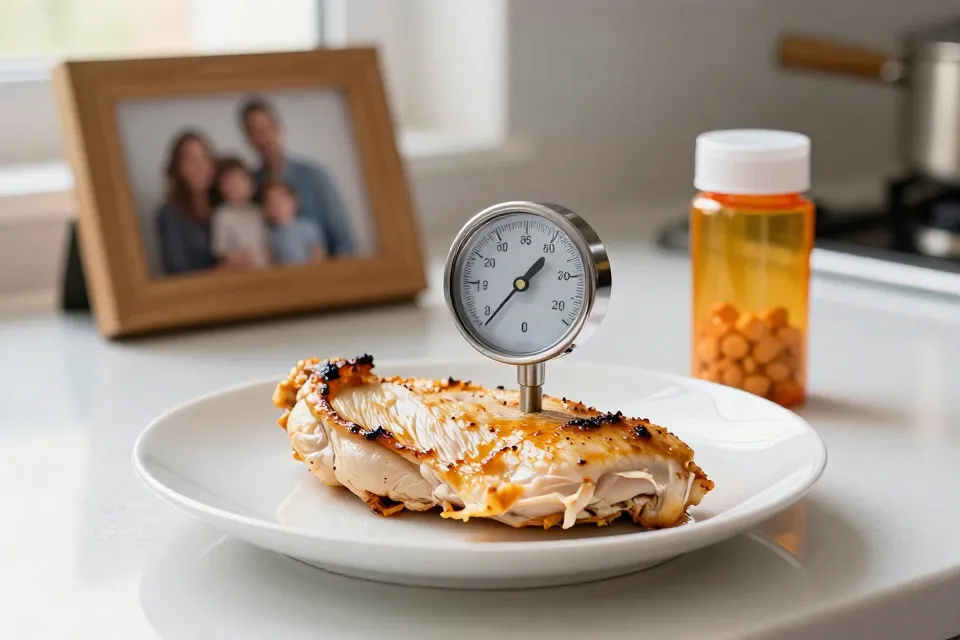
Some people get much sicker from food poisoning. That includes older adults, children under 5, pregnant women, and people with weakened immune systems, such as those being treated for cancer or living with diabetes, kidney disease, or HIV/AIDS. If that sounds like you or someone at your table, take these rules extra seriously: always use a thermometer, avoid foods made with raw or undercooked ingredients, and never let leftovers linger. If you think you have food poisoning, call your doctor. For older adults, the CDC has specific advice on safer food choices.
Your Kitchen, Checked in 60 Seconds
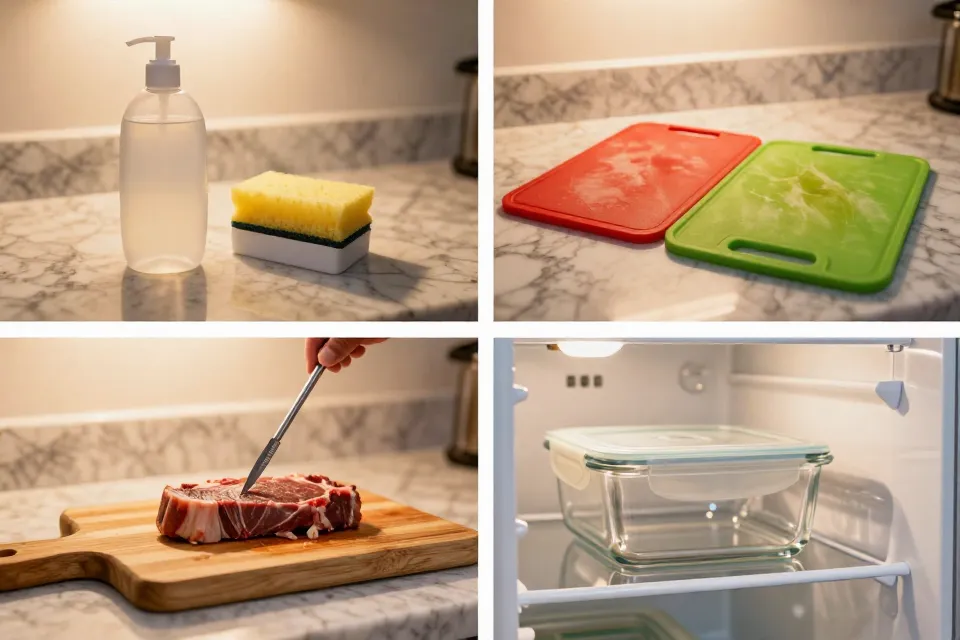
- In the store and fridge: raw meat sealed and separate? Eggs in the main compartment?
- At the sink: 20-second hand wash, hot soapy tools, two cutting boards?
- On the stove: thermometer in the thickest part? Reached 145, 160, or 165 F?
- After dinner: leftovers in shallow containers within 2 hours? Fridge at 40 F or below?
- When defrosting: fridge, cold water, or microwave, never the counter?
Follow these 10 rules and you have covered the four steps the experts swear by: clean, separate, cook, chill. Most kitchen illness is avoidable, and the tools cost little: a food thermometer, an appliance thermometer, and a little planning. Think you learned something? Put your kitchen knowledge to the test → browse the quiz library.
Content on KnowHow Bench is for general information only. See our Disclaimer for details. If you are in a higher-risk group, follow the CDC official guidance for your situation.