
DIY Car Maintenance: 7 Checks You Can Do Yourself (And What to Skip)
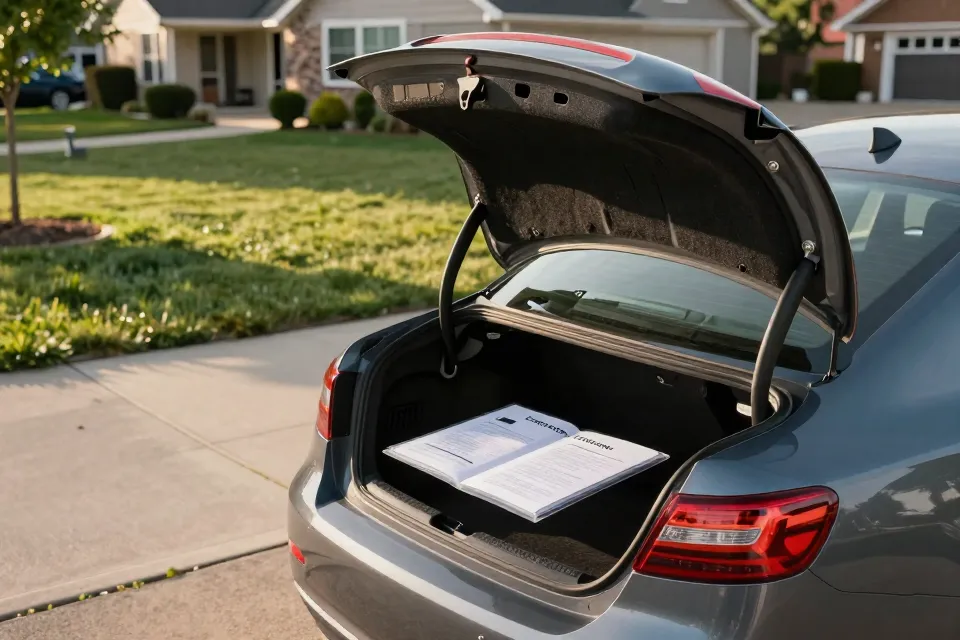
The phrase "car maintenance" makes many drivers picture a greasy garage and a big bill. In reality, a handful of checks take ten minutes each, need no special tools, and catch most problems before they become expensive. This guide covers the seven checks any driver can do at home — oil, tires, coolant, wiper fluid, lights, air filter, and battery — plus an honest look at what belongs in a professional shop. When in doubt about your specific car, your owner's manual is the final authority; every interval mentioned here is the common advice, and your car's schedule may differ.
The First Rule: Read the Owner's Manual
Your glove box contains a maintenance schedule written by the people who built your car. It tells you the recommended oil interval, tire pressures, fluid types, and service schedule for your exact model. No article can replace it. The National Highway Traffic Safety Administration publishes vehicle-maintenance guidance and pushes the same message: follow the manufacturer's recommended maintenance schedule for your vehicle. Professional auto-care groups echo it — the maintenance schedule in your manual is the single most useful tool you own.

Check 1: Engine Oil
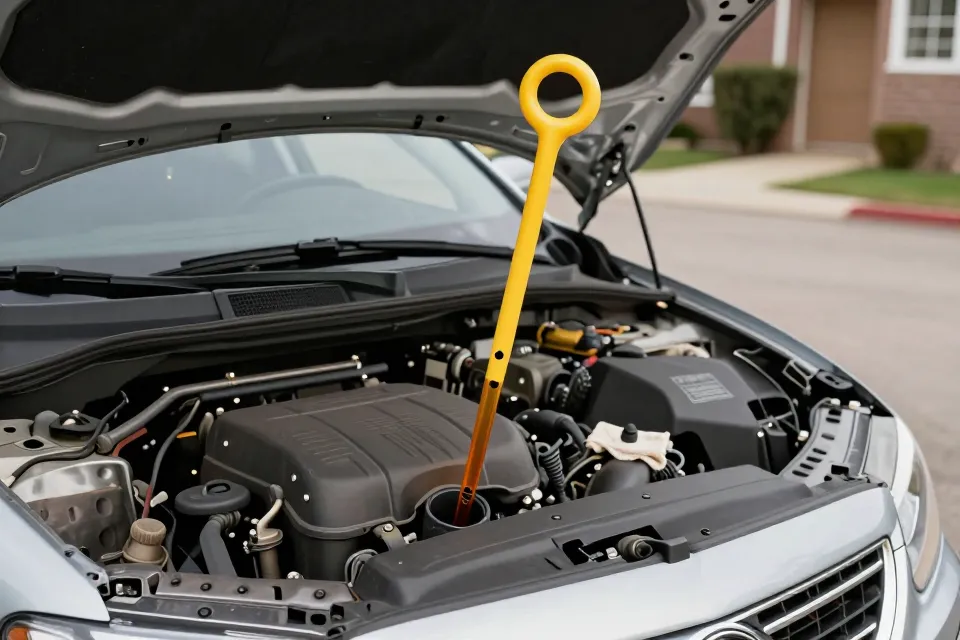
Oil lubricates the engine, and low or old oil is a fast way to shorten an engine's life. The old rule of "change oil every 3,000 miles" has been replaced for most modern cars by longer intervals — often 5,000 to 10,000 miles, or as the manual says. Between changes, a monthly check takes one minute:
- Park on level ground and wait a few minutes after the engine has been off, so the oil settles in the pan.
- Pull the dipstick, wipe it clean, reinsert fully, and pull it again.
- Read the level between the two marks. If it is at or below the low mark, add the oil type listed in the manual — a little at a time, rechecking as you go.
Do not overfill. Too much oil is nearly as bad as too little. If the level drops noticeably between checks, you have a leak or the engine is burning oil — time for a professional look.
Check 2: Tire Pressure and Tread
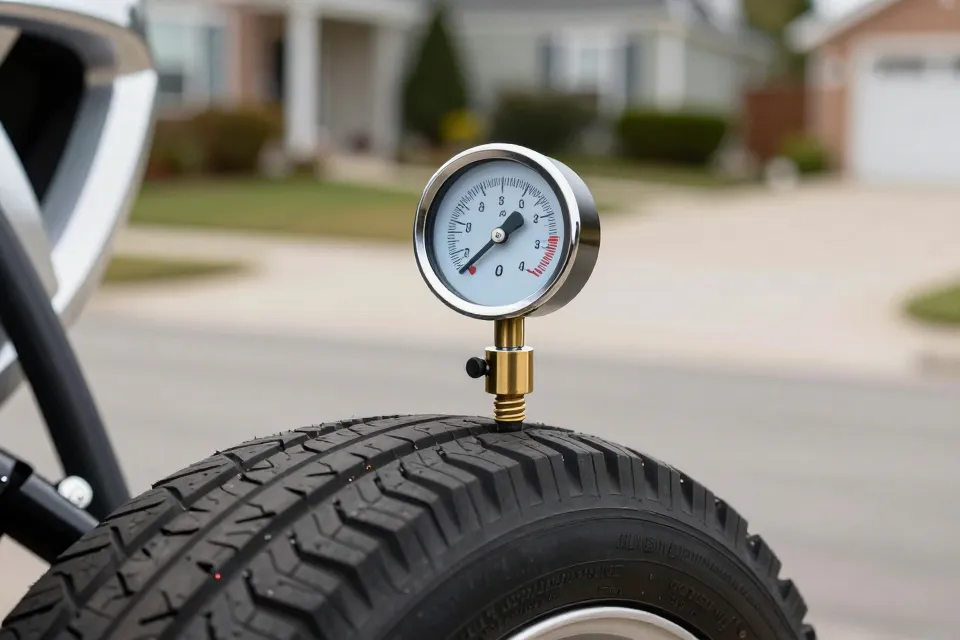
Underinflated tires wear faster, use more fuel, and handle worse; overinflated tires ride roughly and wear the center. The correct pressures for your car are printed on a sticker in the driver's doorjamb (and often in the manual) — not on the tire sidewall, which shows the tire's maximum, not your car's target. Check pressure monthly with a $5 gauge when the tires are cold, and add air to match the doorjamb numbers.
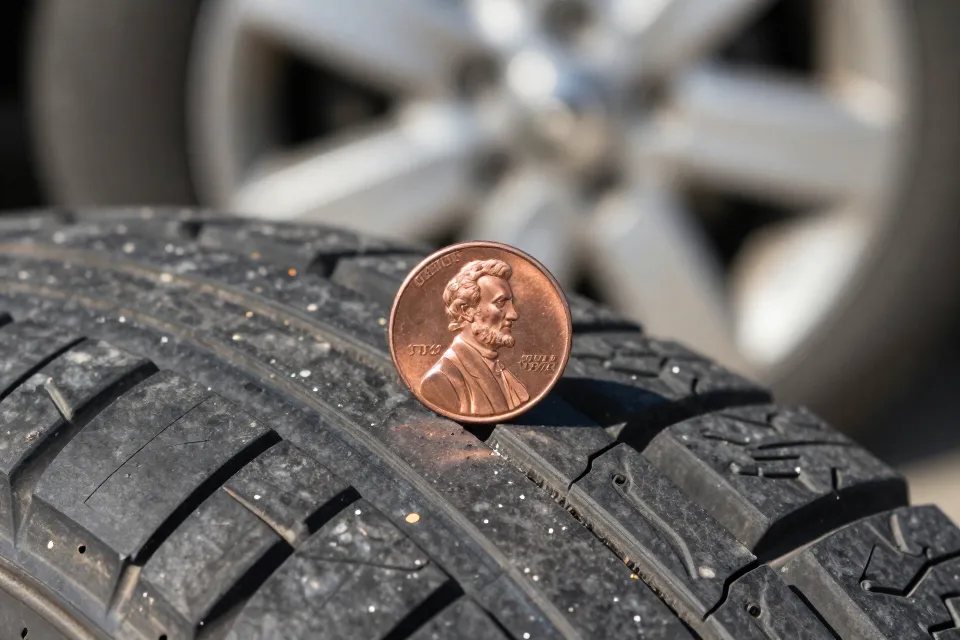
Check tread the cheap way: insert a penny into a tread groove with Lincoln's head upside down. If you can see the top of his head, the tread is at about 2/32 inch and the tire needs replacing. Many experts also suggest the quarter test — if the top of Washington's head is visible, tread is near 4/32 inch, the level where wet-road grip starts to suffer. Then give each tire a once-over for cuts, bulges, and nails.
Check 3: Coolant (Antifreeze)
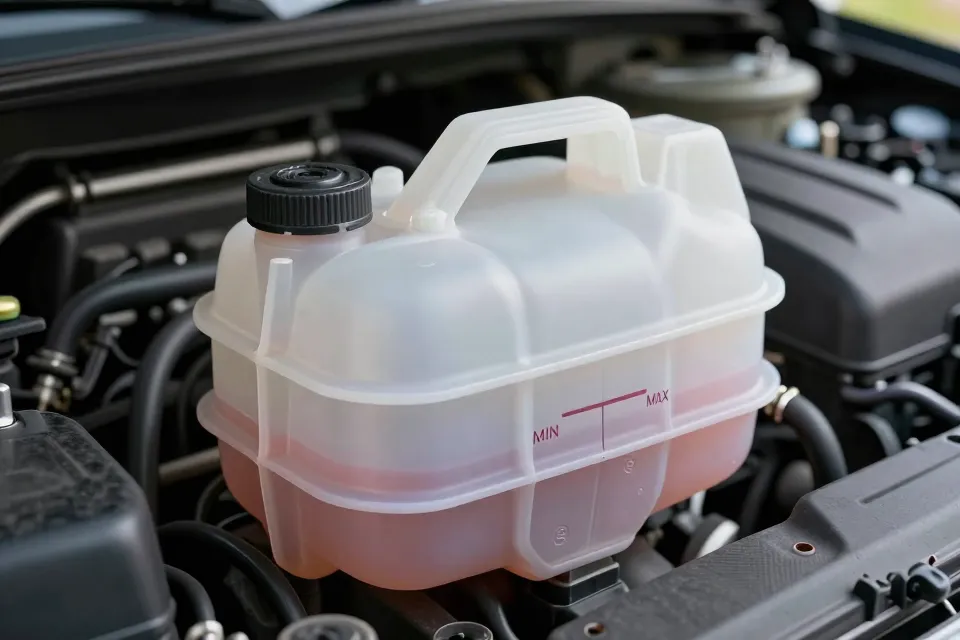
Coolant keeps the engine from overheating in summer and freezing in winter. With the engine cold (never open the radiator cap on a hot engine — the system is pressurized and can spray boiling fluid), check the coolant level in the translucent overflow tank against the MIN and MAX lines. Top it off with the type of coolant the manual specifies — mixing the wrong types can damage the cooling system. If you are adding coolant more than occasionally, you have a leak; that is a shop job.
Check 4: Wiper Blades and Washer Fluid
Visibility is a safety item, not a convenience. Two easy habits:
- Washer fluid: fill the reservoir with washer fluid whenever it runs low. Use fluid meant for the season — winter formulas resist freezing.
- Wiper blades: rubber wears out in about six months to a year depending on climate. When they streak, skip, or chatter, replace them; blades are cheap, snap on in seconds, and most auto-parts stores will show you how or even install them free.
Check 5: Lights
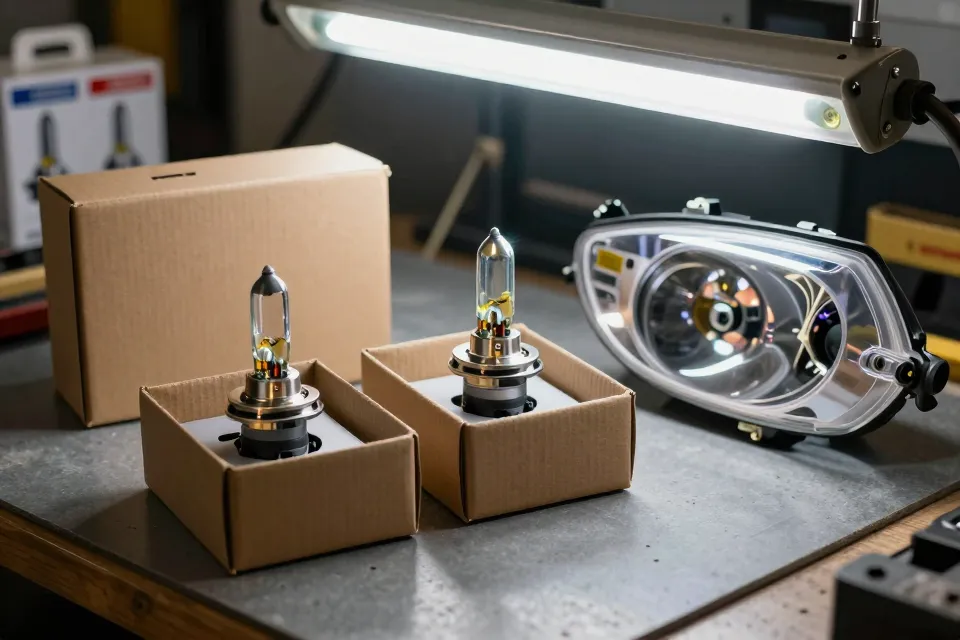
Dead bulbs are a ticket risk and a safety hazard. Once a month, walk around the car with a helper and test: headlights (low and high beam), turn signals front and rear, brake lights (the helper can watch, or back up to a reflective surface), reverse lights, and hazard flashers. Replacing a bulb is often a plug-and-play job the manual explains; if the lens assembly is sealed, leave it to a shop.
Check 6: Engine Air Filter
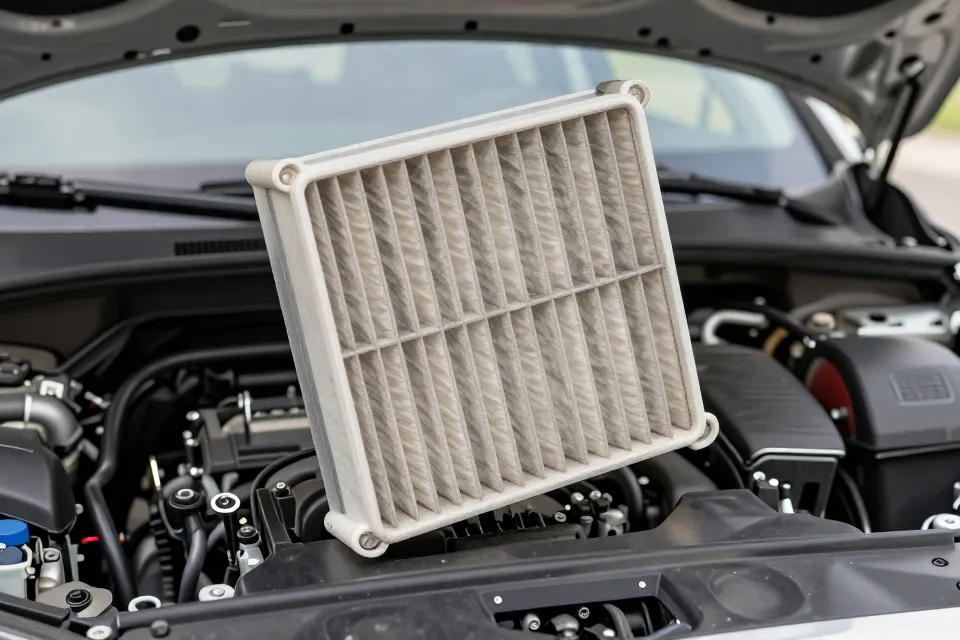
A clogged air filter can hurt performance and fuel economy. Find the filter box under the hood, unclip it, pull the filter, and hold it up to the light. If it is visibly clogged or dirty enough that light barely passes, replace it — it is a cheap part and one of the easiest DIY swaps on any car. Change it according to the manual's interval, and more often if you drive on dusty roads.
Check 7: Battery Terminals
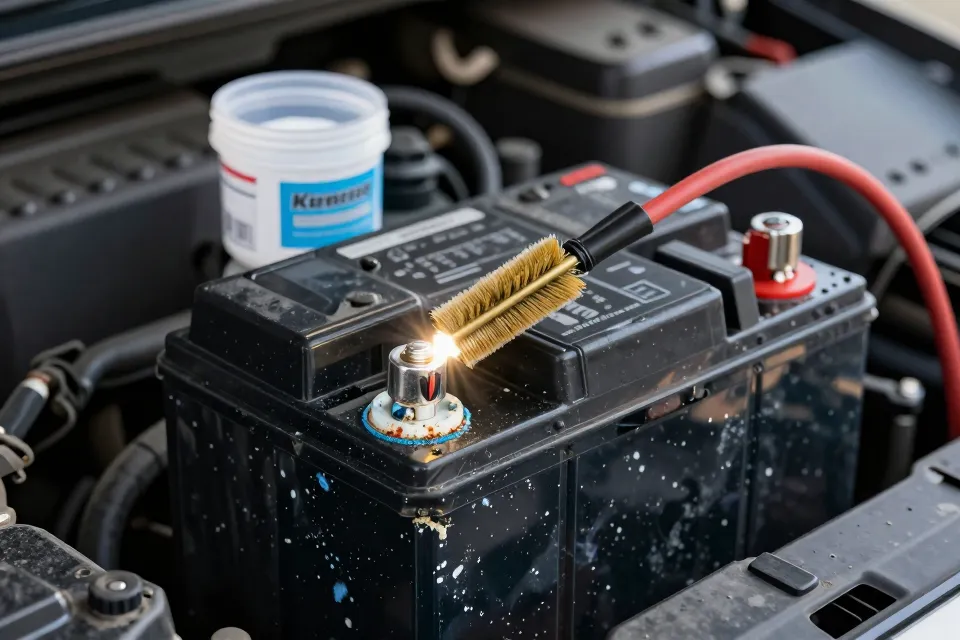
Corrosion on battery terminals — the white or bluish crust — can cause slow starts or no starts even when the battery is healthy. Twice a year, inspect the posts and cables. If you see buildup, disconnect the negative cable first, clean the posts with a battery brush or an old toothbrush and a mix of baking soda and water, rinse with clean water, dry, reconnect (negative last), and coat lightly with petroleum jelly or a battery-terminal spray to slow future corrosion. If the car struggles to start, the battery or alternator may be failing — a shop can load-test the battery for you, often free.
What Belongs in a Shop (Honestly)
Knowing your limits saves you money and prevents damage. Leave these to a professional:
- Brake work beyond checking fluid level — brakes are safety-critical.
- Suspension and steering — struts, ball joints, alignment wear.
- Transmission and differential service.
- Cooling system repairs — hoses, thermostat, radiator leaks.
- Belt and timing-chain replacement on most modern engines.
- Anything where the manual says "see your dealer" or where the job needs special tools you do not own.
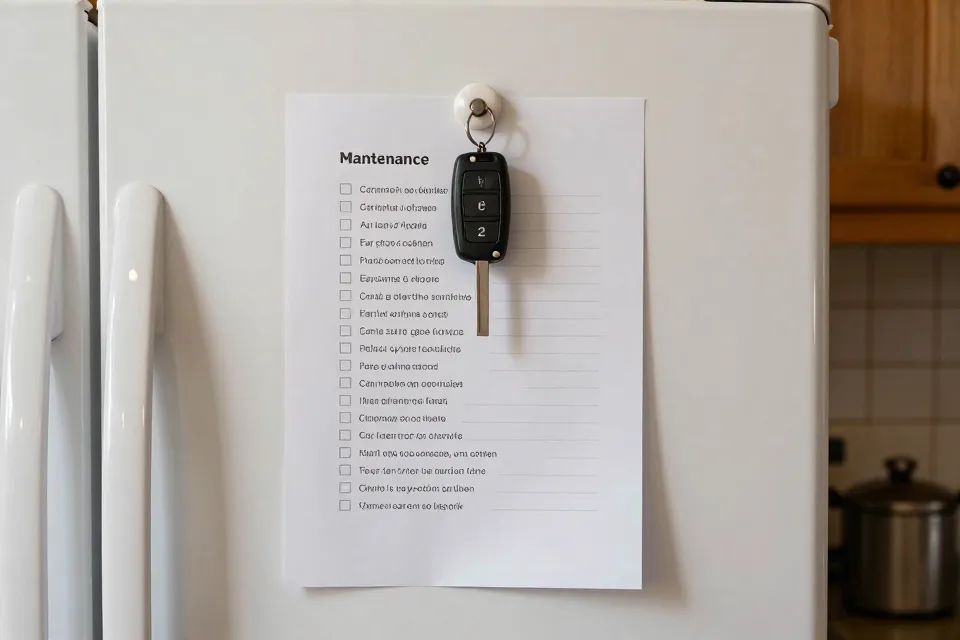
The 15-Minute Monthly Routine
Print this list and run it once a month, and before long trips:
- Oil level checked (cold, level ground)
- Tire pressure matches the doorjamb sticker (cold)
- Tread passes the penny/quarter test
- Windshield washer fluid filled
- All lights work (walk-around with a helper)
- Coolant between MIN and MAX (engine cold)
- Battery terminals clean and tight
- Wiper blades streak-free
- No new warning lights on the dash
Monthly checks catch the small stuff, and the manual catches the rest. The cars that still run well at 200,000 miles are rarely lucky — they are maintained. Ten minutes a month is a small price for that kind of reliability.
Want to test more car care skills? Browse the quiz library for quick practice.
Content on KnowHow Bench is for general information only. See our Disclaimer for details.