
How to Read a Food Label: Serving Sizes, % Daily Value, and Smart Shopping Tips
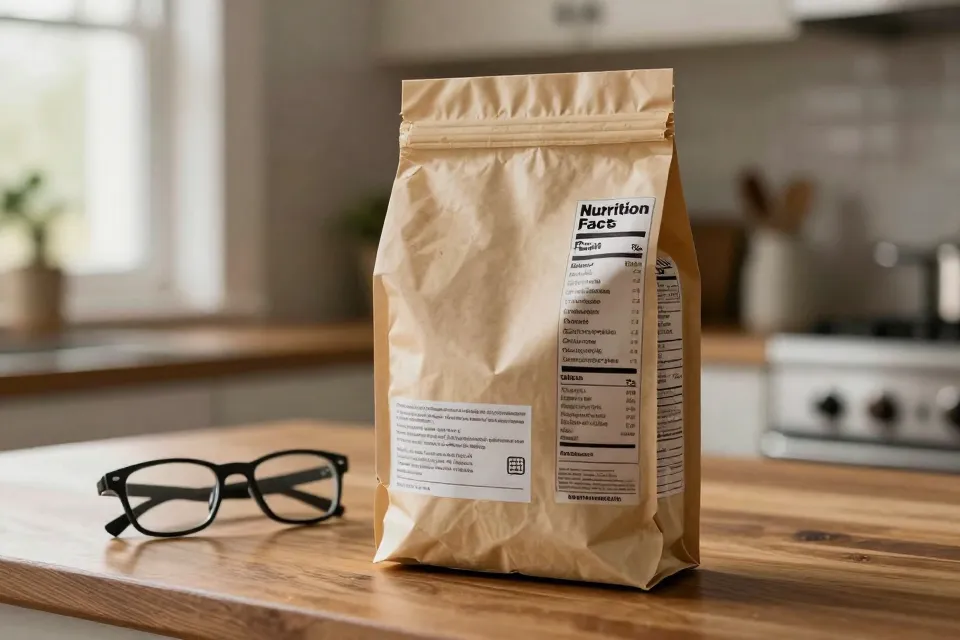
Reading a food label feels like homework until you know where to look. The front of the package shouts its best qualities, the back whispers a more honest story, and the two often disagree. The good news is that every Nutrition Facts panel follows the same rigid layout, so a few fixed habits — check the serving size, use the percent Daily Values, and skim the ingredients list — are enough to make smarter calls in the aisle without a magnifying glass.
Why the Label Looks Different From the One You Grew Up With
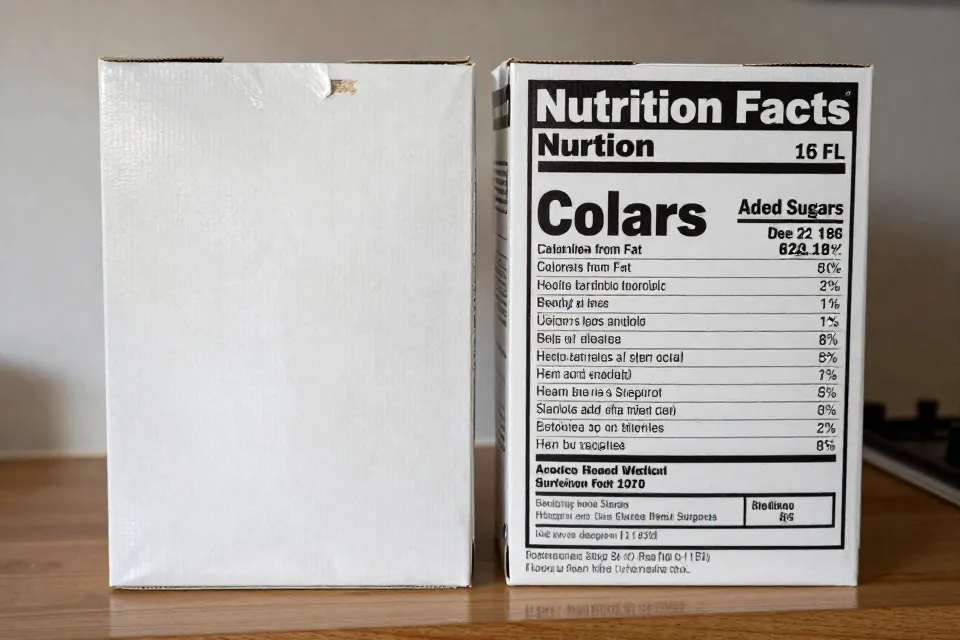
The panel you see today is the first major redesign of the Nutrition Facts label in more than two decades, introduced by the FDA to reflect newer science about how diet relates to chronic disease. Serving sizes were rebuilt around what people actually eat and drink instead of what they should eat. Calories were printed in larger, bolder type, and a brand-new line for added sugars appeared. The old 'calories from fat' row is gone because researchers long ago realized that the type of fat matters far more than the total amount. Vitamins A and C are no longer required, while vitamin D and potassium were promoted to required entries, each shown in exact milligrams rather than a bare percentage.
Step 1: Lock In the Serving Size Before Anything Else
Every figure on the panel — calories, grams, and percentages — belongs to one serving of the food, not to the whole package. This single detail causes more confusion than any other, because shoppers routinely read a bag of snacks as if the numbers covered the entire bag. A serving size records the amount people typically eat at one time, drawn from national consumption data; it is not a recommendation about how much you should eat. The FDA recalibrated many serving sizes to match modern habits: a 12-fluid-ounce can of soda now counts as one serving, and a serving of ice cream grew from 1/2 cup to 2/3 cup. When a container that holds several servings could reasonably be finished in one sitting, some labels print a dual column — for example 'Per serving' on the left and 'Per container' on the right — so you can see at a glance what eating the whole package means for your day.
Step 2: Treat Calories as a Per-Serving Number
Calories measure the energy that one serving supplies from fat, carbohydrate, and protein combined. Since the redesign, this number sits in extra-large type, which makes it fast to compare two similar products at a glance. The comparison only works when the serving sizes are comparable, so always pair the calorie line with the serving size line. The fine print at the bottom of the panel explains that Daily Values are based on a 2,000-calorie daily diet. That figure is a general benchmark for nutrition advice, not a personal prescription — the label itself notes that your needs may be higher or lower.
Step 3: Let % Daily Value Do the Math
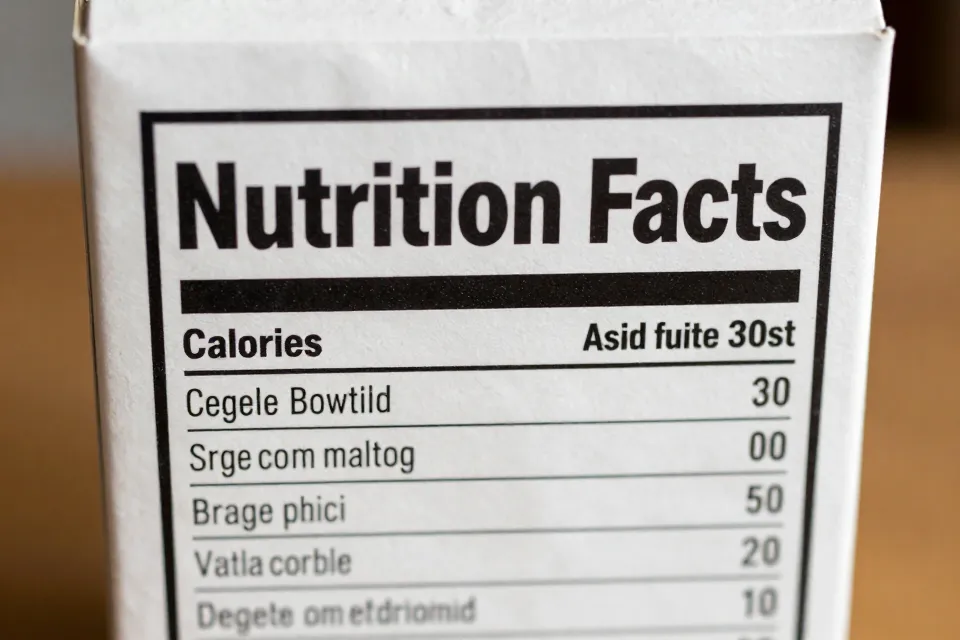
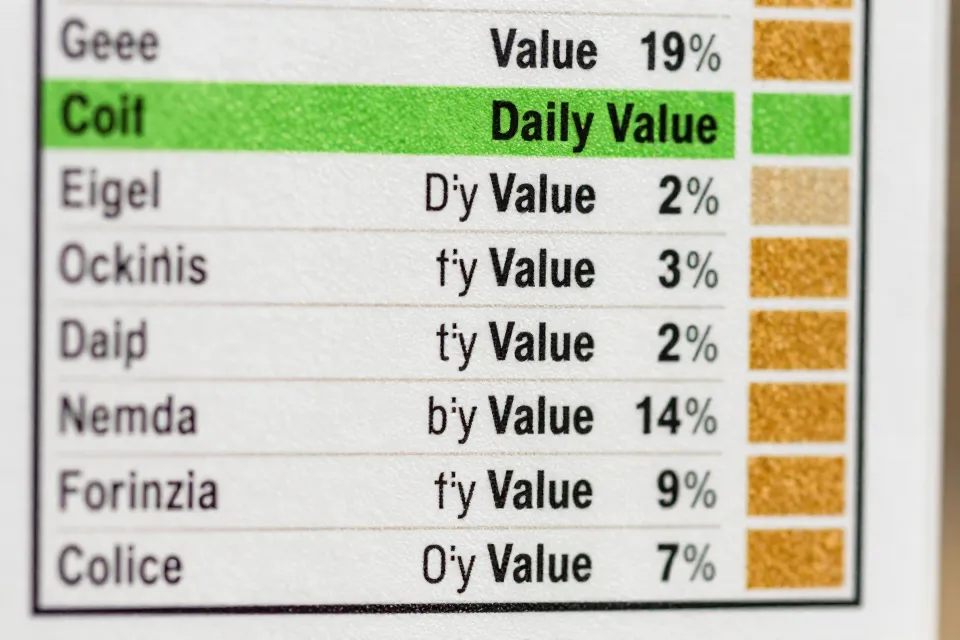
The % Daily Value (%DV) answers the question that trips up most beginners: how much of a day's target for this nutrient does one serving cover? It also spares you the chore of translating grams and milligrams into decisions. The FDA's rule of thumb is refreshingly simple: 5% DV or less per serving is low, and 20% DV or more per serving is high. You can use the same rule twice. Aim low for saturated fat, sodium, and added sugars, and aim high for dietary fiber, vitamin D, calcium, iron, and potassium — the nutrients the label pushes you to get enough of. A few lines never show a %DV, including total sugars and trans fat, because no daily target has been set for them. When two brands compete for your cart, the %DV column settles the argument faster than any math.
Step 4: Give Added Sugars Its Own Look
Added sugars are sugars put into food during processing, along with syrups, honey, and sugars drawn from concentrated fruit or vegetable juice. They are a different story from the sugars that occur naturally in milk, whole fruit, and vegetables, which never show up in this line. The FDA set a Daily Value for added sugars of 50 grams per day, anchored to a 2,000-calorie diet, and the Dietary Guidelines for Americans advise keeping added sugars below 10 percent of daily calories. A handy conversion: 4 grams is roughly one teaspoon of sugar, so a single sweetened drink can silently consume the better part of a day's allowance. Many shoppers are genuinely startled the first time they convert the grams on their favorite yogurt, granola, or pasta sauce into teaspoons.

Step 5: Read the Ingredients List From the Top Down
Federal rules require ingredients to appear in descending order of weight, with the ingredient present in the largest amount listed first. That makes the first three items the true biography of the package; everything after them plays a supporting role in practice. Sugar is the name to watch, and it travels under many aliases — high-fructose corn syrup, cane syrup, honey, molasses, malt syrup, and dextrose are a few of the common ones. Because several sweeteners can each look unremarkable on their own, a list that repeats variations of sugar can hide the real story behind the weight-ordering rule: together, those sweeteners may outweigh every other ingredient in the food.
Decode the Front-of-Package Claims
Front-of-package claims are not decoration — the FDA defines what many of them may mean, so consumers can trust the exact numbers behind them. 'Low sodium' means 140 milligrams or less per serving for most foods; 'low fat' means 3 grams or less; and 'low calorie' means 40 calories or less. 'Good source' signals 10 to 19 percent of the Daily Value, while 'high' or 'excellent source' means 20 percent or more. 'Reduced' takes a different path: it means at least 25 percent less of a nutrient than the usual version of the product, which is not the same as being low. In December 2024 the FDA finalized a stricter definition of the word 'healthy', adding limits on saturated fat, sodium, and added sugars plus a requirement for a meaningful amount from at least one food group such as fruit or vegetables, with label compliance beginning in 2028. Words that never get this precise treatment — 'natural', 'wholesome', 'farm-fresh' — are far looser, which is why the back panel is a better witness than the front.
Label Myths Worth Unlearning
- Myth: The serving size tells me how much I should eat. Truth: it records how much people typically eat, so it sizes up the food, not your plate. Physical activity, age, and your doctor's advice set the real portion for you.
- Myth: A 5% Daily Value means the food is 5% fat. Truth: it means one serving delivers 5% of the day's target for that nutrient, based on a 2,000-calorie diet. It says nothing about what the product is made of.
- Myth: 'Calories from fat' disappeared, so fat no longer matters. Truth: the label still lists saturated fat and trans fat in grams; the change only reflects newer science about the type of fat being the smarter question.
- Myth: The numbers on a dual-column label apply to the whole package. Truth: the left column is per serving, and the right column covers the whole container; the two only match when the package holds a single serving.
- Myth: Zero grams trans fat means there is absolutely no trans fat. Truth: rounding rules let a product show '0 g' when a serving contains less than half a gram, so scanning the ingredients list for partially hydrogenated oil remains worthwhile.
- Myth: 'Gluten-free' or 'natural' equals healthy. Truth: those phrases speak to gluten content and processing methods, not to vitamins, fiber, or calories. A gluten-free cookie is still a cookie.
Quick Tricks for Faster Shopping
- Compare like with like — check that serving sizes match before you stack calories or sodium from two brands side by side.
- Apply the 5/20 rule without thinking: keep saturated fat, sodium, and added sugars near 5%, and let fiber, vitamin D, calcium, iron, and potassium climb toward 20%.
- Judge by the first three ingredients: if sugar, refined flour, or oil leads the list, the front of the box was written by marketing.
- Focus your reading on the five products you buy most often; many shoppers find the fastest payoff comes from auditing their routine items rather than the whole pantry.
- Treat front-of-package catchphrases as advertising, and treat the Nutrition Facts panel plus the ingredients list as the receipt.
The Bottom Line
A food label is a fixed tool, not a riddle. The serving size sets the stage, calories fill in the energy picture, % Daily Value converts nutrients into quick yes-or-no judgments, added sugars flags the sneakiest line, and the ingredients list delivers the final verdict. Five habits are enough to change how you shop: start at the top of the panel, keep 5% low and 20% high, flip the package over, and trust the small print more than the slogan. In a few weeks, the whole scan takes about thirty seconds.
Want to test more everyday skills? Browse the quiz library for quick practice.
Content on KnowHow Bench is for general information only. See our Disclaimer for details.